
Roundabouts, Four-Way Stops, and Yield Signs: Who Actually Goes First
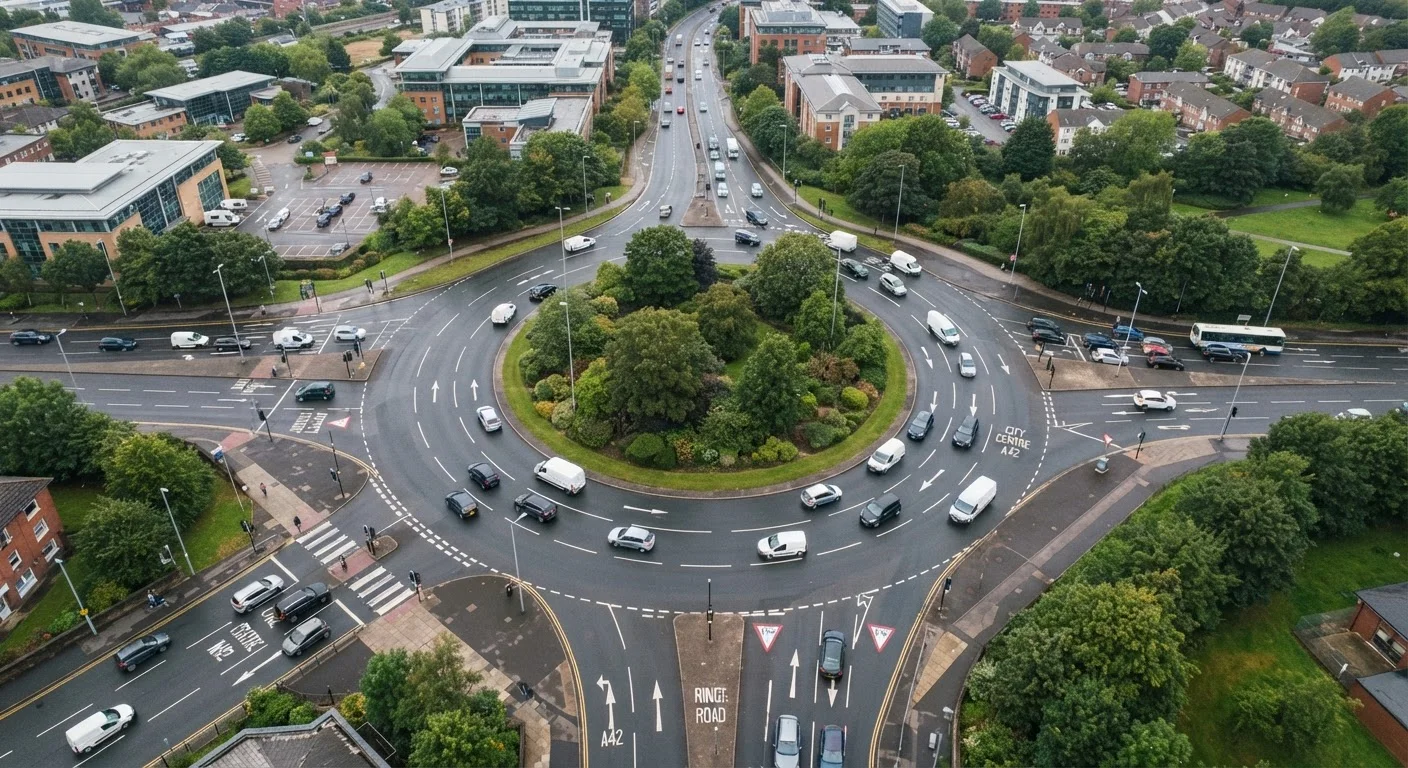
Photo credit: AdvisorHQ.net | Informative Website
In this article
Right-of-way rules at intersections confuse even experienced drivers. Clear explanations of who yields, when, and why — backed by standard traffic law.
Why Intersection Rules Confuse Drivers
Intersection conflicts are among the most common causes of crashes in the United States. Much of that risk comes not from recklessness, but from genuine uncertainty about who is supposed to go first. Roundabouts, four-way stops, and yield signs look different, operate differently, and are governed by distinct rules - yet many drivers treat them interchangeably or simply guess.
This reference covers the core right-of-way principles at each intersection type, grounded in standard U.S. traffic law. Understanding these rules clearly reduces hesitation, limits confrontation, and makes every intersection safer for everyone. If you are just starting out behind the wheel, see our guide for new drivers for broader preparation advice.
Roundabouts: Yield to Traffic Already Inside
A roundabout (also called a traffic circle) is a one-way circular intersection where vehicles travel counterclockwise around a central island. The governing rule is straightforward: vehicles entering the roundabout must yield to vehicles already circulating inside it.
Key behaviors to follow:
- Slow down as you approach. Look left - that is where circulating traffic comes from.
- Wait for a safe gap in circulating traffic before entering. Do not force your way in.
- Once inside, you have the right of way over entering vehicles.
- Signal your exit before leaving the roundabout, even in a single-lane circle.
- Never stop inside a roundabout except to avoid a collision.
Multi-lane roundabouts add complexity: choose your lane before entering based on your exit (right lane for right exits or going straight; left lane for exits past the halfway point). Lane changes inside the circle are not permitted.
Right of way
The legal right of a vehicle, cyclist, or pedestrian to proceed through an intersection or road section before others. It is granted by traffic controls or established rules, not taken unilaterally.
Roundabout
A one-way circular intersection where entering traffic yields to vehicles already circulating inside. Roundabouts reduce conflict points compared to traditional signalized intersections.
Gap acceptance
The driver's judgment about whether the available space in a stream of traffic is large enough to enter safely. Poor gap acceptance at yield signs is a leading cause of merge-related crashes.
Uncontrolled intersection
An intersection with no traffic signals, stop signs, or yield signs. Right-of-way defaults to the vehicle already in the intersection or to the vehicle approaching from the right.
Four-Way Stops: Order, Timing, and Ties
A four-way stop (also called an all-way stop) requires every vehicle approaching from any direction to come to a complete stop before proceeding. The right-of-way order follows a clear hierarchy:
- First to arrive, first to go. The vehicle that stopped first has the right of way.
- Ties go to the driver on the right. When two vehicles arrive at the same time facing each other or from adjacent directions, the driver on the left yields to the driver on the right.
- Straight traffic over turning traffic. If two vehicles arrive simultaneously and face each other directly, the vehicle going straight has priority over one turning left across its path.
Confusion at four-way stops often escalates tension between drivers. Understanding the hierarchy - rather than waving others through unpredictably - keeps traffic moving safely and reduces the kind of frustration that can contribute to road rage incidents.
Yield Signs: Gap Acceptance, Not Just Slowing
A yield sign does not mean stop - but it does mean you must be fully prepared to stop. The legal obligation is to slow down and give the right of way to traffic you are merging with or crossing. You may proceed without stopping only when there is a safe gap in that traffic.
Common yield locations include:
- Roundabout entries (as covered above)
- Highway on-ramps merging with through traffic
- T-intersections where a minor road meets a major road
- Bicycle lanes and pedestrian crosswalks
The critical skill at a yield is gap acceptance - judging whether the space in oncoming traffic is large enough for you to enter safely. Yielding too cautiously can cause rear-end collisions behind you; entering too aggressively creates a collision risk ahead. For more on navigating high-speed merges, our highway merging guide covers gap selection in detail.
Yield ≠ Stop - But Be Ready To
Many drivers either blast through yield signs without checking or come to an unnecessary full stop, disrupting traffic flow. The correct approach is to reduce speed, assess the gap, and stop only if needed. Treating every yield as a stop wastes time and can cause rear-end collisions, while ignoring it entirely creates serious collision risk.
Special Cases and Pedestrian Priority
Regardless of intersection type, pedestrians in a marked or unmarked crosswalk generally have the right of way in most U.S. states. Cyclists often have the same legal standing as vehicles and follow the same intersection rules. Emergency vehicles with lights and sirens activated always take priority - pull over and stop until they pass.
Uncontrolled intersections (no signs, no signals) default to the same right-hand rule used at four-way stops: yield to traffic already in the intersection and to vehicles approaching from your right. These intersections are more common in rural areas and older neighborhoods than many drivers realize.
Right-of-way rules apply on surface roads, but the fundamentals of reading intersections and yielding appropriately carry over when you drive on the interstate for the first time - particularly at on-ramps and weave zones.
~40%
Of all U.S. traffic crashes occur at or near intersections
According to the Federal Highway Administration, intersections represent one of the most dangerous locations on the road network.
~75%
Reduction in serious injury crashes at roundabouts vs. signalized intersections
The Insurance Institute for Highway Safety (IIHS) reports substantial safety benefits when traditional intersections are converted to roundabouts.

Author
Cars & Driving Editorial Team
Cars & Driving Editorial Team is the collective byline for our editorial team and contributor network. Articles published under this byline or an editorial pen name are researched, written, and reviewed according to our editorial standards for clarity, consistency, and independence before publication.
View all articles →