
Understanding APR: Why the Interest Rate Alone Doesn't Tell the Full Story
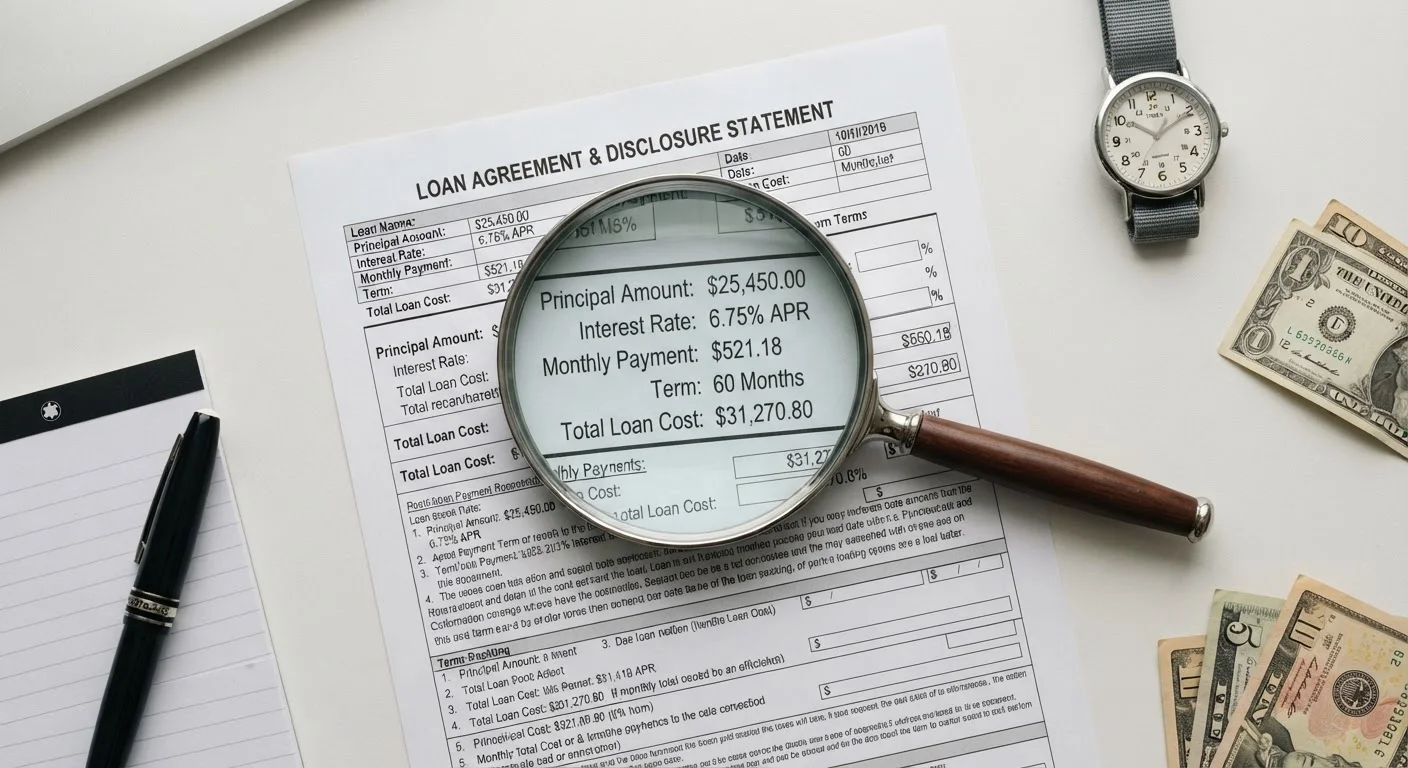
Photo credit: AdvisorHQ.net | Informative Website
In this article
APR bundles fees and interest into one number. Learn how to use it to compare loans accurately before you borrow.
Key Takeaways
- APR includes both the interest rate and most loan fees, making it a more accurate cost comparison tool.
- A lower interest rate doesn't always mean a lower APR - fees can flip the result.
- Credit cards often have multiple APRs for purchases, balance transfers, and cash advances.
- APR does not capture the effect of compounding, which is measured separately by APY.
- Reviewing APR before signing helps you understand the true cost of any loan or credit product.
Why the Interest Rate Alone Can Mislead You
When lenders advertise a loan, the number they lead with is usually the interest rate - the percentage charged on the amount you borrow. It looks simple and easy to compare. But the interest rate is only part of the story. It doesn't capture the origination fees, broker commissions, or other charges that significantly affect how much you'll actually pay.
That's where APR - Annual Percentage Rate - comes in. APR bundles the interest rate together with most mandatory fees and expresses the combined cost as a single annual percentage. It was designed precisely to prevent consumers from being misled by attractively low headline rates that hide expensive fees buried in the fine print.
For a practical foundation, see the glossary of credit and debt terms that covers APR alongside other key borrowing concepts you'll encounter.
~7+ pts
Typical gap between mortgage rate and APR
For many conventional mortgages, APR can run several tenths of a point above the stated rate due to origination costs and points, though the gap varies by lender and loan structure.
20%+
Average credit card purchase APR in the US
Federal Reserve data has tracked average credit card interest rates above 20% in recent periods, underscoring the cost of carrying revolving balances.
Required
APR disclosure before signing under federal law
The Truth in Lending Act (TILA) mandates that lenders disclose APR to consumers before a loan agreement is finalized, giving borrowers a standardized basis for comparison.
How APR Is Calculated
APR is calculated by taking the interest rate, adding the financed fees, and spreading the total cost over the loan term as an annualized figure. The exact formula varies by loan type, but the principle is consistent: the more fees a lender charges, the wider the gap between the interest rate and the APR.
Consider two personal loan offers, each at a 9% interest rate on a $10,000 loan. Lender A charges a 3% origination fee; Lender B charges no fee. Lender A's APR will be noticeably higher than 9% once that fee is baked in - Lender B's APR will stay closer to its stated rate. The interest rates looked identical; the APRs reveal the true difference in cost.
A borrower compares two auto loan offers, both advertised at 6.5% interest on a $20,000 loan. One lender charges a $600 origination fee; the other charges none.
A homebuyer sees a mortgage advertised at 7.0% and notices the APR listed as 7.4%.
A credit card holder carries a $2,000 balance at a 24% purchase APR without paying it off each month.
It's worth noting that not every fee ends up inside the APR figure. For mortgages in particular, some third-party costs such as appraisals or title insurance may be excluded, so APR comparisons across different loan types should be made with that context in mind.
APR on Credit Cards: A Different Animal
Credit card APR functions differently from installment loan APR because your balance fluctuates month to month. On most cards, if you pay your statement balance in full by the due date, you pay no interest at all - APR becomes irrelevant for that billing cycle. APR only starts working against you when you carry a balance.
Most credit cards list multiple APRs: a purchase APR for everyday spending, a balance transfer APR for moving debt from another card, and a cash advance APR - which is typically the highest of the three and often begins accruing immediately without a grace period.
Understanding how card balances and interest interact is central to avoiding the debt traps described in our article on why borrowers end up deeper in debt despite making payments.
Always Ask for the APR in Writing
Before agreeing to any loan or credit product, request the APR - not just the interest rate - in a written disclosure. Federal law entitles you to this information before signing. Comparing APRs across two or three offers for the same loan type and term is one of the most straightforward ways to identify the lower-cost option.
Using APR to Compare Borrowing Options
APR is most powerful as a comparison tool when you're evaluating loans of the same type and term length. Because APR is annualized, comparing a 12-month loan against a 60-month loan using APR alone can be misleading - the absolute amount of interest paid over five years will naturally be higher, even if the APR appears similar.
When shopping for a mortgage, auto loan, or personal loan, request the APR - not just the rate - from every lender. Federal law (the Truth in Lending Act) requires lenders to disclose APR before you sign, so you have the right to ask for it upfront.
Your credit score plays a direct role in the APR you're offered: stronger credit typically means lower rates and fewer fees, which together produce a meaningfully lower APR. Before committing, use the pre-borrowing checklist to confirm you've reviewed all the terms.
This article is for general informational and educational purposes only and does not constitute personalized financial or legal advice. Consult a qualified financial professional before making borrowing decisions based on your individual circumstances.
Frequently Asked Questions

Author
Finance Editorial Team
Finance Editorial Team is the collective byline for our editorial team and contributor network. Articles published under this byline or an editorial pen name are researched, written, and reviewed according to our editorial standards for clarity, consistency, and independence before publication.
View all articles →