
Natural vs. Conventional Personal Care Products: A Practical Comparison
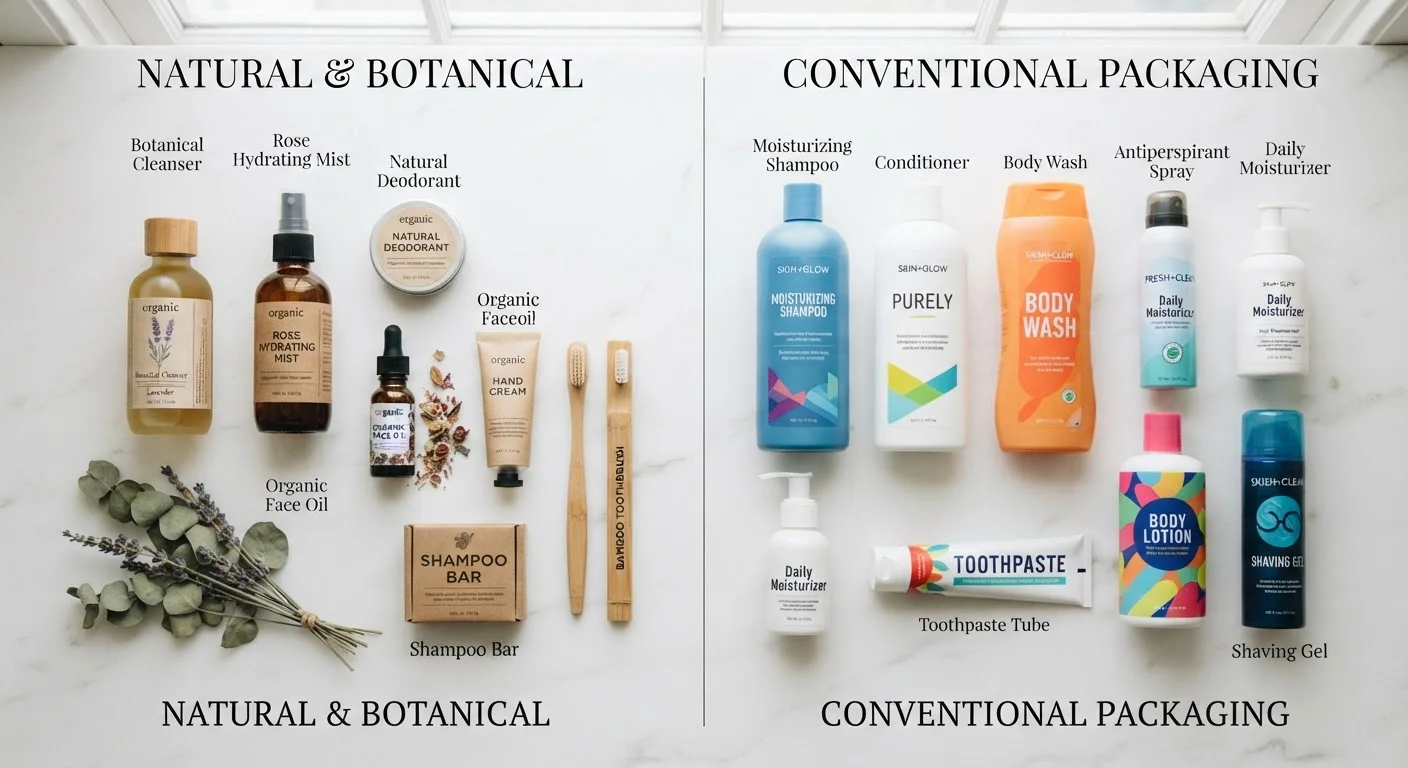
Photo credit: AdvisorHQ.net | Informative Website
In this article
What does 'natural' actually mean on a label? This comparison weighs formulation differences, ingredient transparency, and what to look for.
Key Takeaways
- The term 'natural' on personal care labels has no standardized legal definition in the United States.
- Both natural and conventional formulations can be safe and effective - origin of an ingredient does not determine its safety profile.
- Conventional products often carry more rigorous efficacy testing; natural products vary widely in stability and preservation.
- Fragrance, preservatives, and allergens appear in both categories and deserve equal scrutiny regardless of label claims.
- Reading the full ingredient list is more informative than relying on front-label marketing language.
What 'Natural' Actually Means on a Label
Walk down any personal care aisle and you'll see the word natural on dozens of products - shampoos, moisturizers, deodorants, and more. Despite how authoritative it sounds, the U.S. Food and Drug Administration (FDA) has not established a formal definition for "natural" as applied to cosmetics and personal care items. This means any brand can use the term without meeting a specific ingredient or manufacturing standard.
A handful of third-party certification programs - such as USDA Organic, COSMOS, and NSF/ANSI 305 - do impose specific criteria around ingredient sourcing and processing. However, these certifications are optional, and many products claiming to be natural carry none of them.
By contrast, conventional personal care products rely on synthetic compounds, petroleum-derived ingredients, and lab-formulated preservatives. These ingredients are not inherently unsafe - many have extensive safety data and are reviewed by industry bodies such as the Cosmetic Ingredient Review (CIR). Understanding this regulatory landscape is the foundation for any honest comparison. For a deeper look at decoding what's actually in a formula, see our plain-language label guide.
Formulation Differences: Stability, Preservation, and Performance
One of the most practical distinctions between natural and conventional formulations lies in preservation and shelf stability. Conventional products commonly use synthetic preservatives - such as parabens or phenoxyethanol - that have well-established antimicrobial profiles and decades of safety review. Natural formulations often rely on alternatives like rosemary extract, vitamin E, or essential oils, which can be less predictably effective at preventing microbial growth, particularly in water-based products.
This matters for everyday safety: a poorly preserved product, regardless of whether its ingredients are plant-derived or synthetic, can harbor harmful bacteria or mold. Shorter shelf life and the need for proper storage are more common considerations with natural formulations.
On the performance side, conventional products tend to carry a larger body of clinical testing behind their active ingredients. Retinoids, salicylic acid, and niacinamide, for example, have robust peer-reviewed evidence supporting their skin benefits. Some plant-derived actives - such as bakuchiol or azelaic acid from grain fermentation - are accumulating research, but the evidence base is generally less extensive. For a related look at how active ingredient classification affects your routine, our retinol vs. retinoids breakdown is a useful reference.
| Natural Personal Care | Conventional Personal Care | |
|---|---|---|
| Regulatory definition | No standardized US legal definition | No definition; ingredients reviewed by CIR/FDA |
| Preservation | Plant-based; variable efficacy | Synthetic; extensive antimicrobial data |
| Shelf life | Often shorter; storage-sensitive | Longer; more stable across conditions |
| Clinical evidence for actives | Growing but generally limited | Broader, well-established research base |
| Allergen potential | Botanicals and essential oils can irritate | Synthetics can also cause reactions; varies by formula |
| Ingredient transparency | Varies; certifications add accountability | Full INCI listing required; fragrance still undisclosed |
| Environmental claims | Often marketed as eco-friendly; verify certifications | Higher synthetic/petroleum use; packaging varies |
Ingredient Transparency and Common Concerns
A persistent myth is that plant-derived ingredients are automatically gentler or safer than synthetic ones. In practice, natural ingredients can trigger significant allergic reactions - essential oils, botanical extracts, and nut-derived emollients are among the more frequent causes of contact dermatitis identified in dermatology research. Synthetic ingredients, meanwhile, can be engineered to minimize irritation potential and are often more consistent batch to batch.
One concern that crosses both categories is fragrance. Whether a product is labeled natural or conventional, "fragrance" or "parfum" on the ingredient list can represent a complex mixture of dozens of compounds that manufacturers are not required to disclose individually. This is worth noting for anyone with sensitivities. Our guide to fragrance in personal care covers this in detail.
The most reliable habit, regardless of which category you prefer, is reading the full INCI (International Nomenclature of Cosmetic Ingredients) ingredient list rather than relying on front-label claims. Our ingredient list decoding guide walks through exactly how to do that.
Focus on the Ingredient List, Not the Front Label
Marketing language like "natural," "clean," or "non-toxic" is not regulated and tells you little about what's actually in a product. Flip to the INCI ingredient list to evaluate what you're applying to your skin. Look for the concentration order, identify any known allergens for your skin type, and check whether a product carries a recognized third-party certification if natural sourcing matters to you.
This article is for general informational purposes only and is not a substitute for personalized advice from a licensed dermatologist or healthcare professional. If you experience skin reactions or have concerns about specific ingredients, consult a qualified provider.

Author
Health & Beauty Editorial Team
Health & Beauty Editorial Team is the collective byline for our editorial team and contributor network. Articles published under this byline or an editorial pen name are researched, written, and reviewed according to our editorial standards for clarity, consistency, and independence before publication.
View all articles →