
Home Organization Terminology: A Plain-Language Reference
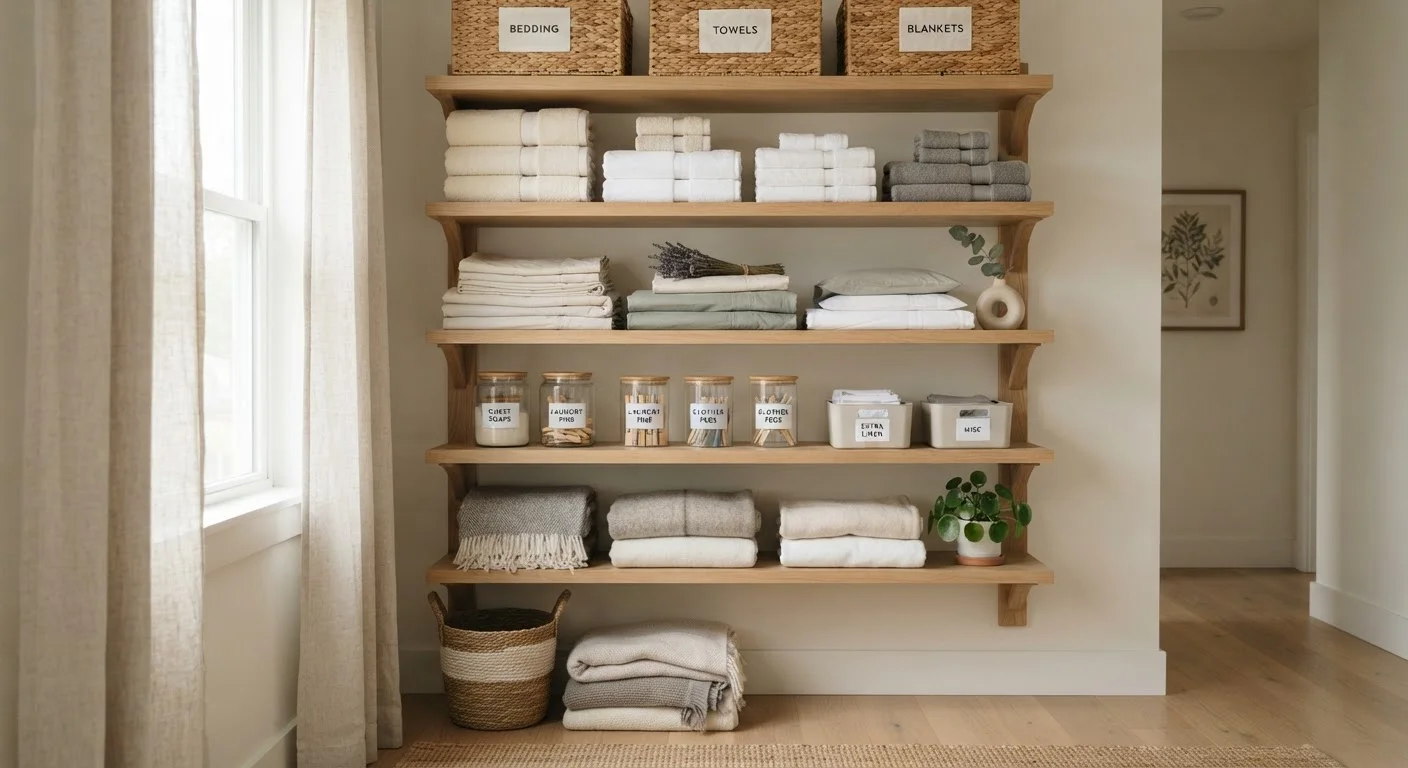
Photo credit: AdvisorHQ.net | Informative Website
In this article
From 'capsule closet' to 'negative space,' this reference covers the organizing vocabulary you'll encounter most often — explained without the jargon.
Why Organizing Vocabulary Matters
Home organization content - books, videos, blog posts - is filled with terms that get used freely but rarely explained. Words like decluttering, zoning, and negative space carry real, specific meanings that shape how systems actually work. When you understand the terminology, you can evaluate advice more critically and apply it more effectively.
This reference covers the most commonly used home organization terms in plain language. Whether you're starting fresh or refining an existing system, these definitions will help you follow along with any guide, podcast, or method you encounter. For a broader foundation, see our beginner's guide to home organization, which walks through room-by-room priorities alongside these concepts.
| Core organizing activity | Decluttering - removing items that no longer serve a purpose |
| Maintenance principle | One-in, one-out: one item leaves when a new one arrives |
| Space concept | Negative space: intentionally empty areas that reduce visual clutter |
| Entry area term | Landing zone: a fixed spot near the door for daily essentials |
| Pantry rotation rule | FIFO (First In, First Out): use oldest items before newer ones |
| Wardrobe method term | Capsule wardrobe: a small, versatile, interchangeable clothing collection |
Core Terms: Decluttering, Editing, and Purging
These three terms are often used interchangeably, but they describe meaningfully different activities.
- Decluttering is the broad process of removing items that no longer serve a useful or meaningful purpose in your home. It's the umbrella term.
- Editing is a gentler form of decluttering - reviewing what you own and making selective reductions, often used for wardrobes or bookshelves. The goal is refinement, not wholesale removal.
- Purging implies a more decisive, high-volume removal - clearing out a space more aggressively, often after a long period of accumulation.
Understanding which mode you're in helps you pace the work appropriately. Editing a capsule wardrobe is a different task than purging a decade of garage storage.
Decluttering
The process of removing items from your home that no longer serve a purpose or bring value. It's the starting point of most organizing projects.
Zoning
Dividing a room or surface into dedicated areas for specific activities or item types. Zones help prevent categories of items from mixing and make spaces easier to maintain.
Negative space
Intentionally empty areas left on shelves, counters, or in rooms. Negative space reduces visual clutter and gives a sense of calm and openness to a space.
Containerizing
Grouping loose items into a bin, basket, or box so they can be stored and retrieved as a single unit. It simplifies tidying and reduces visual chaos on shelves and surfaces.
Landing zone
A designated spot near an entry point where everyday items - bags, keys, shoes - are consistently placed upon arrival. A well-defined landing zone prevents items from migrating through the home.
Capsule wardrobe
A compact, curated clothing collection built around versatile pieces that can be mixed and matched. The goal is fewer decisions and less clutter while maintaining functional variety.
FIFO
Short for First In, First Out. A rotation principle most useful in pantries and refrigerators: older items are placed at the front to be used before newer ones, reducing waste.
Decision fatigue
The mental exhaustion that builds up from making repeated choices. Organized systems reduce daily decisions by giving every item a defined home, lowering cognitive load over time.
Space and System Terms
Once items are edited down, these concepts guide how you arrange and maintain what remains.
- Zoning means dividing a room or surface into dedicated areas for specific activities or item categories - a reading corner, a bill-paying station, a kid's art area.
- Negative space refers to intentionally empty areas in a room or on a shelf. Rather than filling every surface, negative space gives the eye a place to rest and makes a room feel calmer and less crowded.
- Containerizing means grouping loose items into a bin, basket, or box so they can be managed as a single unit. This reduces visual clutter and makes tidying faster.
- The one-in, one-out rule is a maintenance principle: when something new enters the home, something equivalent leaves. This prevents gradual accumulation without requiring repeated decluttering sessions. Our article on maintenance rules that keep homes tidy covers this and related strategies in detail.
- Decision fatigue is the mental exhaustion that comes from making too many choices. Good organizing systems reduce daily decisions - for example, a defined home for every item means you never have to decide where to put things.
In shared homes, these systems require negotiation. See our guide on organizing shared living spaces for strategies that account for different habits and standards.
Method-Specific Terms You'll Encounter
Several popular organizing methods have their own vocabulary. Here are the terms that appear most often across methods.
- Capsule wardrobe - a curated, limited clothing collection built around versatile, interchangeable pieces. The goal is fewer items that work together more often.
- Sparks joy - a phrase from the KonMari method (developed by organizing consultant Marie Kondo) used as a criterion for deciding whether to keep an item. The idea is to evaluate belongings based on positive emotional response rather than guilt or obligation.
- Command center - a designated area, usually near an entrance or in a kitchen, that centralizes household logistics: mail, calendars, keys, school papers, and similar items.
- Landing zone - similar to a command center but more focused on arrival: a spot near the front door where bags, shoes, and daily essentials are consistently placed. A clear landing zone prevents items from spreading throughout the home.
- FIFO (First In, First Out) - borrowed from inventory management, this principle means using or accessing the oldest items first. It's most useful in pantries and refrigerators to reduce food waste.
If you're curious how organizing vocabulary compares to renovation and construction terms, our home improvement terminology reference is a useful companion glossary for homeowners.

Author
Home & Garden Editorial Team
Home & Garden Editorial Team is the collective byline for our editorial team and contributor network. Articles published under this byline or an editorial pen name are researched, written, and reviewed according to our editorial standards for clarity, consistency, and independence before publication.
View all articles →