
Seasonal Rotation: How to Organize Belongings That Aren't in Use Year-Round
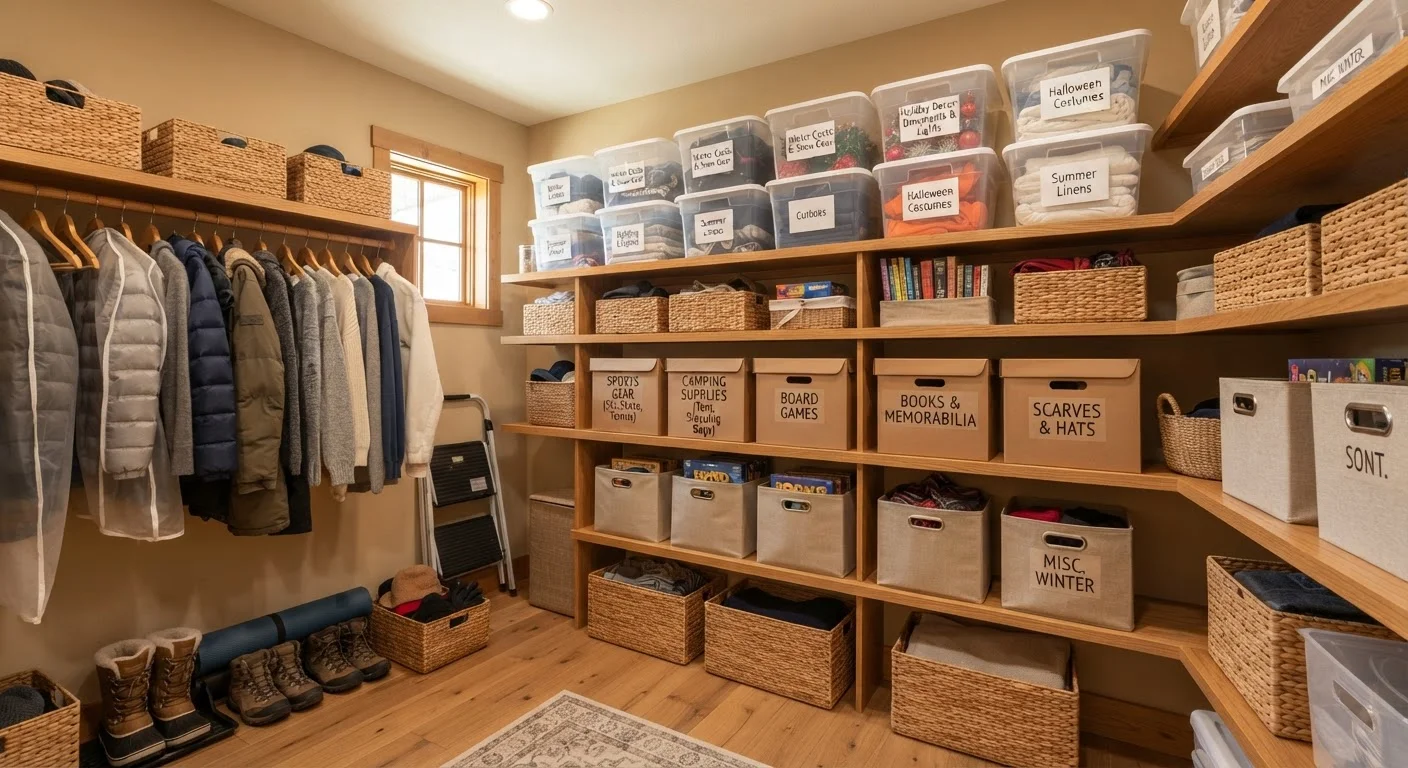
Photo credit: AdvisorHQ.net | Informative Website
In this article
Clothes, décor, sports gear, and holiday items don't need to occupy prime space all year. Learn how to build a rotation system that keeps everyday areas clear.
Key Takeaways
- Group belongings by season or frequency of use before choosing any storage solution.
- Consistent labeling and inventory tracking make retrieval fast and stress-free.
- Prime home storage space should be reserved for items used at least monthly.
- Climate-appropriate containers protect off-season items from moisture, pests, and damage.
- Scheduling two rotation sessions per year prevents the system from becoming overwhelming.
Why Seasonal Rotation Deserves a Dedicated System
Most homes contain a surprising share of items that are genuinely needed - just not all at once. Winter coats, beach towels, holiday décor, ski gear, and gardening tools cycle in and out of daily life on a predictable schedule. Yet many households store everything in the same accessible spaces, leaving prime closet and cabinet real estate occupied by items that won't be touched for months.
Building a deliberate rotation system solves this. Rather than cramming off-season belongings wherever they fit, you assign them a proper holding area and a clear retrieval plan. The result is more breathing room in everyday spaces and less time spent hunting for things when seasons shift.
If you're new to home organization broadly, the beginner's organization guide is a useful foundation before tackling seasonal storage. For homes where multiple people share storage decisions, organizing shared living spaces addresses the coordination piece.
The key principle: frequency of use determines proximity. Items used daily or weekly belong at arm's reach. Items used a few times a year can live further away - on high shelves, in labeled bins, in a basement, or under beds.
Start With One Category, Not the Whole House
If a full-home seasonal audit feels overwhelming, begin with just one category - clothing is often the highest-impact starting point. Get that system working smoothly before extending the approach to décor, gear, or linens. Small, completed wins build the habit better than one large unfinished project.
What You'll Need Before You Begin
Gather these materials before starting your first rotation. Having everything on hand prevents mid-project trips to the store that stall momentum.
What you will need
Uniform storage bins with lids
Stack efficiently and protect contents from dust and pests during off-season storage.
Adhesive or clip-on labels
Identify bin contents at a glance without opening each container during retrieval.
Permanent marker or label maker
Create clear, durable labels that won't fade or peel over multiple seasons.
Vacuum storage bags
Compress bulky soft items like comforters, sweaters, and coats to save significant bin space.
Cedar blocks or moisture-absorbing packets
Protect fabric items from moths and humidity during long-term off-season storage.
Notebook or digital notes app
Keep a simple inventory of what is stored where so nothing gets forgotten between seasons.
Step-by-Step: Building Your Rotation System
Work through these steps the first time you set up the system. After the initial setup, each future rotation takes a fraction of the time.
Sort belongings into seasonal categories
Go through each area of your home and pull out items that are not needed for the current season. Group them into broad categories: clothing and footwear, bedding and linens, sports or outdoor gear, holiday and seasonal décor, and garden tools or equipment. Don't overthink this pass - focus on identifying what can leave everyday spaces, not on organizing the details yet.
Declutter before you store
Before packing anything away, assess each item honestly. Damaged, outgrown, or duplicate items should be donated, repaired, or discarded rather than stored. Storing things you no longer use wastes space and makes retrieval harder. Keep only what you expect to actually use when that season returns.
Choose the right containers for each category
Match containers to content type. Rigid bins with snap lids work well for holiday décor, sports equipment, and shoes. Vacuum storage bags are especially effective for bulky soft items like winter coats and comforters, reducing their volume substantially. Avoid cardboard boxes for long-term storage - they're vulnerable to moisture and pests.
Pack and label every container clearly
Pack items by category and season, keeping one season per bin where possible. Label each bin on the side (not the top) so labels are visible when stacked. Include both the category and the season: Winter Bedding, Summer Sports Gear, Holiday - Christmas. Consistent labeling is the step most people skip and later regret.
Assign and organize your storage area
Designate a specific zone in your home for off-season storage: a dedicated closet shelf, under-bed space, a section of the garage, or a basement area. Within that zone, arrange bins so the soonest-needed season is most accessible. Place the next upcoming season's items at the front or top, and push furthest-future seasons to the back or bottom.
Schedule and perform seasonal swaps
Set two calendar reminders per year - typically spring and fall - for your rotation swap. When the time comes, retrieve the incoming season's bins, unpack and distribute those items into active storage, then pack up the outgoing season's items, re-label if needed, and return them to the storage zone. The whole process should take under two hours once the system is established.
Don't Let Off-Season Storage Become a Dumping Ground
One common pitfall: the seasonal storage zone gradually absorbs random clutter that has nothing to do with rotation. Reserve that space strictly for items with a defined return date. If something doesn't have a season it belongs to, it needs a different home - or a trip to donation. Mixing true seasonal items with general overflow makes retrieval frustrating and undermines the whole system.
Once your system is running, pair it with a maintenance habit like the one-in, one-out rule to prevent off-season storage from quietly accumulating items that should have been donated. Also consider underused storage spots in your home - under-bed space, high closet shelves, and garage wall systems are common candidates for off-season bins.
For households tight on floor space, vertical versus horizontal storage strategies can help you decide how to stack and stack your seasonal containers most efficiently. If the garage is part of your plan, a garage storage audit can help you reclaim and allocate that space before filling it with seasonal bins.

Author
Home & Garden Editorial Team
Home & Garden Editorial Team is the collective byline for our editorial team and contributor network. Articles published under this byline or an editorial pen name are researched, written, and reviewed according to our editorial standards for clarity, consistency, and independence before publication.
View all articles →