
Native Plants Worth Getting to Know for a Lower-Maintenance Yard
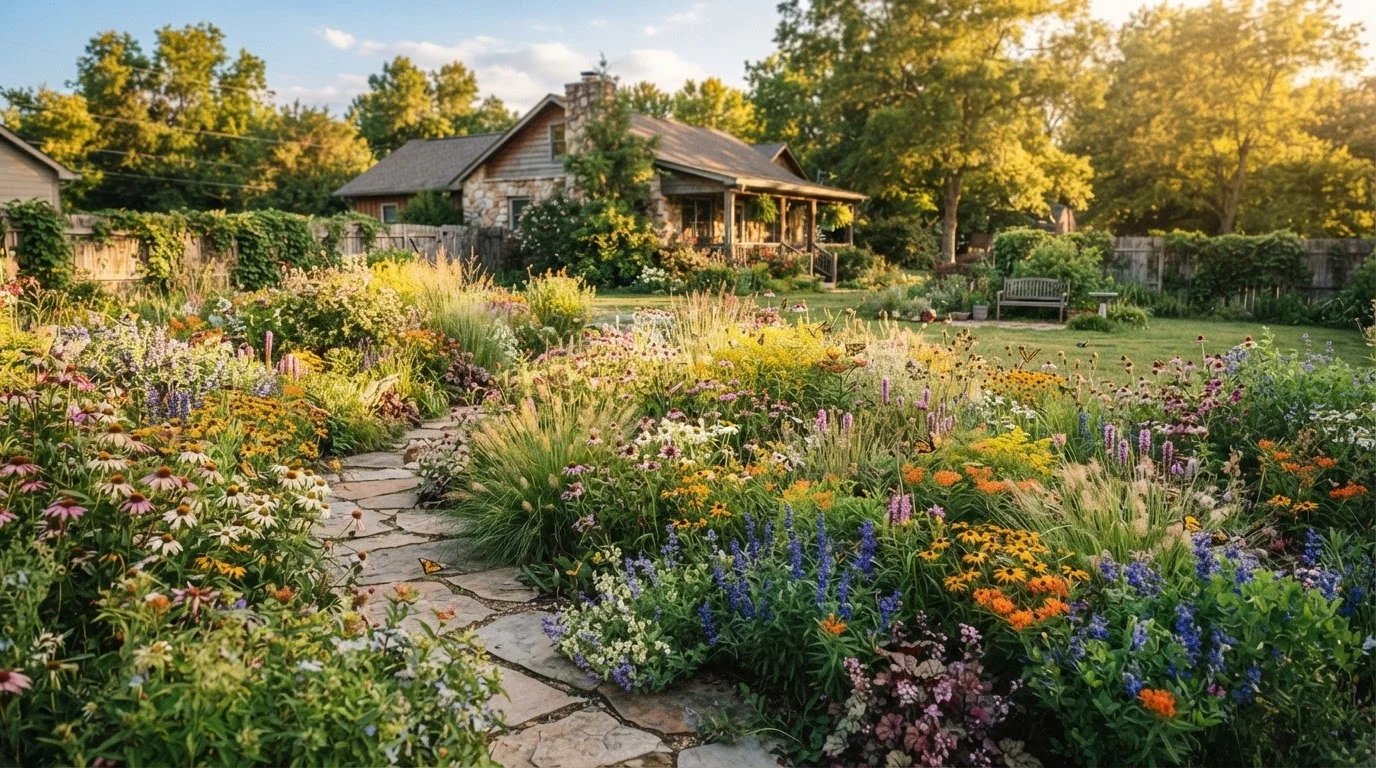
Photo credit: AdvisorHQ.net | Informative Website
Native plants are adapted to local conditions, support pollinators, and often need less water and care. Here are some worth considering by region.
Key Takeaways
- Native plants are adapted to local soils and rainfall, reducing the need for supplemental watering and fertilizing.
- Most natives support local pollinators, birds, and beneficial insects far better than non-native ornamentals.
- Choosing region-appropriate species is the single most important factor in long-term success.
- Establishment takes one to three years; natives are not necessarily low-effort during that initial period.
- Mixing natives into existing beds is a practical starting point before committing to a full conversion.
Why Native Plants Change the Equation
Conventional landscaping often works against the local environment - demanding supplemental irrigation, synthetic fertilizers, and repeated pest management just to keep non-adapted plants alive. Native plants, by contrast, evolved alongside the local climate, soil chemistry, and rainfall patterns. Once established, many need far less intervention than their exotic counterparts.
That said, "native" is not a universal promise of zero maintenance. The term refers to plants that naturally occur in a given region before European settlement, and what qualifies varies considerably by state and even county. A plant native to the Gulf Coast may struggle in the Pacific Northwest. Matching the right species to your specific conditions - sun, soil drainage, climate zone - is what unlocks the real benefits.
If you're already tracking seasonal lawn tasks, pairing that routine with a native planting strategy can reduce overall yard work over time. See our seasonal lawn care calendar for how maintenance shifts month to month. The plants below are organized by broad region and represent some of the more commonly available and gardener-friendly options.
Purple Coneflower (Echinacea purpurea) - Midwest & East
Purple coneflower is one of the most adaptable native perennials in the country, thriving from the Great Plains through the Eastern Seaboard. It tolerates clay soils, summer heat, and moderate drought once established. The daisy-like blooms appear mid-summer through fall, attracting bees, butterflies, and goldfinches that feed on the seed heads.
Plant it in full sun with reasonably well-drained soil. Deadheading (removing spent flowers) prolongs blooming but is optional - leaving seed heads standing through winter benefits birds and adds visual interest in an otherwise bare garden.
Leave seed heads standing through winter to feed goldfinches and add off-season garden structure.
Black-Eyed Susan (Rudbeckia hirta) - Widespread
Few natives are as broadly adapted as black-eyed Susan. It grows across most of the continental U.S. and is often one of the first plants recommended to beginners. It self-seeds readily - which can fill a bed quickly, so some editing may be needed - and handles poor soils better than most garden plants.
It works well in sunny borders, along driveways, or mixed into meadow-style plantings. Because it's drought-tolerant once established, it pairs well with water-efficient irrigation strategies if you're managing a dry-climate yard.
Black-eyed Susan self-seeds readily and tolerates poor soils, making it ideal for low-input landscapes.
California Poppy (Eschscholzia californica) - West & Southwest
The California poppy is the state flower of California but grows successfully throughout the West and in many other regions with well-drained, low-fertility soil. It thrives on neglect - richer soils and overwatering actually reduce blooming. Direct-sow seeds in fall or early spring; it does not transplant well.
Once it goes to seed, it reseeds prolifically, so a single planting can sustain itself for years. It's especially valuable in hot, dry climates where water conservation is a priority.
California poppy blooms best in poor, dry soil - watering less is often the right call.
Wild Columbine (Aquilegia canadensis) - Eastern Woodlands
For gardeners with partially shaded yards in the East, wild columbine fills a niche that few other natives can match. Its nodding red-and-yellow flowers appear in early spring, making it one of the first nectar sources for ruby-throated hummingbirds returning from migration.
It prefers well-drained soil and part to full shade, making it a natural fit under deciduous trees. It also self-seeds, gradually colonizing open spots in a shade garden without becoming invasive in most regions.
Wild columbine is among the first spring bloomers to provide nectar for returning hummingbirds.
Switchgrass (Panicum virgatum) - Broad Range
Ornamental grasses often play a supporting role in the garden, and switchgrass is among the most useful native options for that purpose. It's native to most of the eastern two-thirds of the country, tolerates wet or dry conditions, and provides structure from spring through winter. Many cultivated varieties offer fall color ranging from gold to deep red.
Unlike invasive ornamental grasses such as miscanthus, switchgrass stays in clumps and doesn't spread aggressively. Cut it back to a few inches in late winter before new growth begins. It works well alongside fall yard prep tasks since it's one of the last plants to need attention before winter.
Switchgrass tolerates both wet and dry conditions and provides year-round structure without spreading aggressively.
Blue Wild Indigo (Baptisia australis) - Central & Eastern U.S.
Blue wild indigo is a slow starter - it can take two to three years to bloom after planting - but it rewards patience with a long-lived, virtually maintenance-free presence in the garden. Once established, its deep taproot makes it highly drought-tolerant, and it rarely needs dividing or staking.
The blue-purple flower spikes in late spring are striking, and the inflated seed pods that follow provide late-season interest. It grows best in full sun and well-drained soil and is largely resistant to deer browsing, which is a meaningful practical advantage in many suburban areas.
Blue wild indigo is slow to establish but becomes one of the most drought-tolerant and self-sufficient natives over time.
Getting Started Without Overhauling Everything
You don't need to rip out your entire yard to benefit from native plants. Many gardeners begin by replacing one or two high-maintenance ornamentals with regionally appropriate natives, then expand gradually as they observe what works. This approach also lets you get a feel for establishment needs - most natives require consistent watering during their first growing season before their root systems can sustain them independently.
Give Natives Time to Establish
Most native plants spend their first season focusing on root development rather than showy top growth. Plan to water new plantings regularly during dry spells in year one, then reduce supplemental irrigation as the plants mature. The general rule of thumb among gardeners is: sleep, creep, leap - year one they rest, year two they spread slowly, year three they take off.
For those thinking about how natives fit alongside other planting decisions, our guide on perennials versus annuals walks through how to balance effort and reward across different plant types. Many natives are perennials, meaning they return each year without replanting - a meaningful time and cost savings. And because they attract predatory insects and birds naturally, you may also find yourself relying less on interventions; our piece on garden pest control covers why a diverse planting is one of your best defenses. Starting small, observing carefully, and expanding what works is the most reliable path forward.

Author
Home & Garden Editorial Team
Home & Garden Editorial Team is the collective byline for our editorial team and contributor network. Articles published under this byline or an editorial pen name are researched, written, and reviewed according to our editorial standards for clarity, consistency, and independence before publication.
View all articles →