
Garden Pest Control Without Reaching for a Spray Bottle First
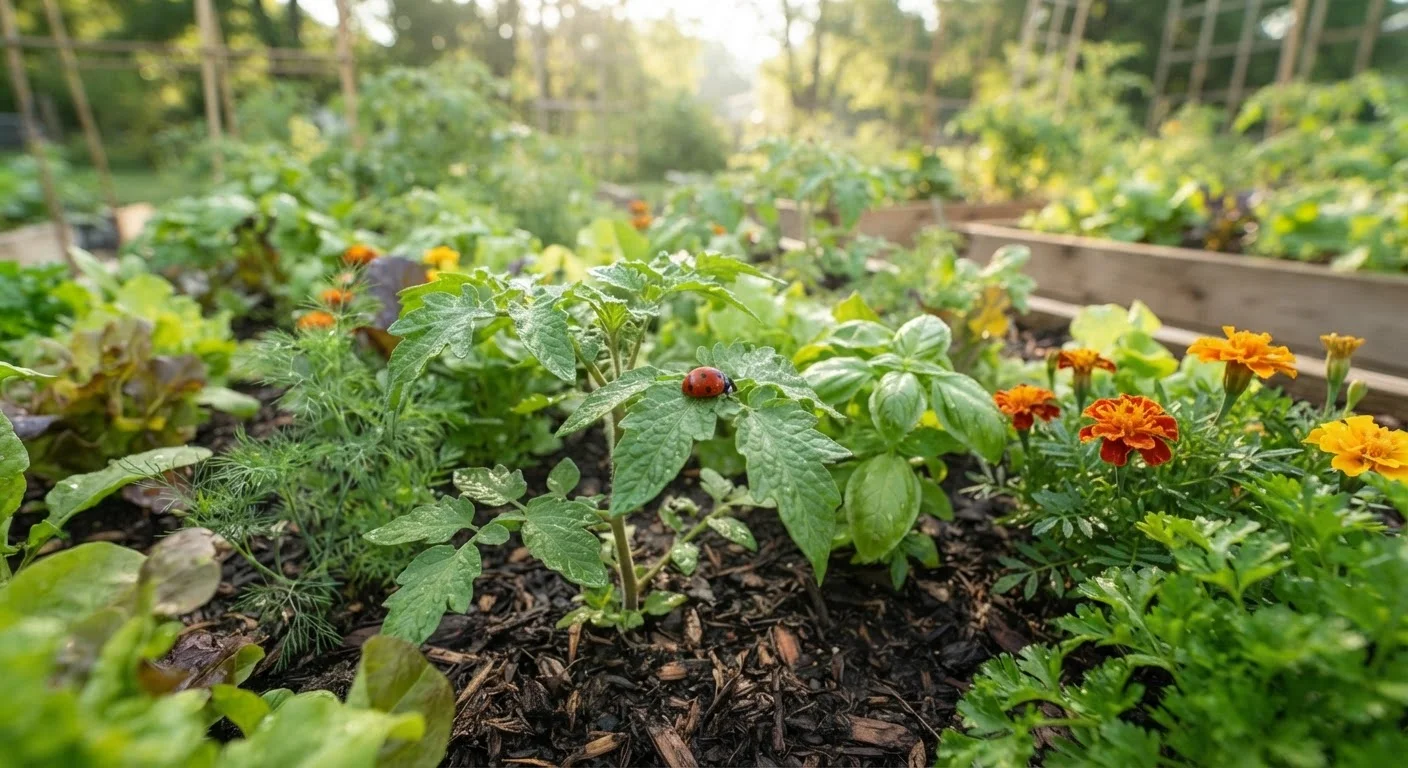
Photo credit: AdvisorHQ.net | Informative Website
In this article
Explore practical, lower-risk approaches to managing common garden pests — from physical barriers to companion planting strategies.
Key Takeaways
- Healthy soil and well-chosen plants are your first and most durable line of pest defense.
- Physical barriers like row covers and copper tape can prevent pest access without chemicals.
- Companion planting uses plant relationships to confuse, repel, or trap common garden pests.
- Beneficial insects - including ladybugs and parasitic wasps - can naturally regulate pest populations.
- Monitoring your garden regularly helps you catch pest problems before they become unmanageable.
Why Pest Management Starts Before the Pests Arrive
Most gardeners discover pest problems after the damage is already visible - chewed leaves, wilted stems, or ravaged fruits. But effective pest management really begins long before any insect shows up. A garden built on good fundamentals is significantly less inviting to pests in the first place.
Healthy soil is central to this. Plants growing in rich, well-structured soil tend to be more vigorous and better able to withstand moderate pest pressure. If you're still building up your soil quality, composting is one of the most impactful steps you can take - see our guide on composting at home for practical steps. Similarly, choosing plant varieties suited to your local climate and spacing them properly to allow good airflow reduces the conditions that attract and sustain pest outbreaks.
Watering habits matter too. Consistently wet foliage can invite fungal problems, which in turn weaken plants and make them more vulnerable to insects. Our piece on garden watering methods covers how different approaches affect plant health.
Physical Barriers: Simple Tools That Keep Pests Out
One of the most overlooked pest control strategies is simply blocking pests from reaching your plants. Physical barriers require no chemistry and, when used correctly, can be highly reliable.
Use floating row covers to exclude flying and crawling insect pests from vulnerable crops.
Row covers made from lightweight spun fabric allow light, water, and air through while creating a physical barrier that insects cannot penetrate. They're especially effective against cabbage worms, aphids, flea beetles, and squash bugs - some of the most destructive vegetable garden pests. Because they require no toxins, they're safe to use right up until harvest.
Apply copper tape or barriers around container edges and raised bed borders to deter slugs and snails.
Slugs and snails cause significant damage to leafy greens and seedlings, especially during cool, moist weather. Copper reacts with the mucus they secrete, creating a mild deterrent that causes them to turn back. This approach is non-toxic and, once installed, requires minimal upkeep.
Install yellow sticky traps to monitor and reduce populations of fungus gnats, whiteflies, and aphids.
Sticky traps don't replace a full pest management strategy, but they serve a dual purpose: they capture flying pests and give you an early signal that a problem is developing. Noticing a sudden spike in trap catches tells you to investigate further before damage escalates.
Interplant pest-repelling herbs and flowers among your vegetables.
Certain plants emit compounds or have growth habits that interfere with how pests locate host crops. Basil is widely cited as a companion for tomatoes, marigolds are thought to confuse aphids and whiteflies, and nasturtiums act as a trap crop that draws aphids away from more valued plants. While results vary and research is ongoing, many gardeners find these pairings add a useful layer of protection with no downside.
Handpick large or visible pests like caterpillars, beetles, and hornworms during regular garden walks.
For many pest species, manual removal is faster and more targeted than any spray option. Handpicking causes zero collateral damage to beneficial insects and can be highly effective when pest populations are still small. Dropping pests into a bucket of soapy water dispatches them quickly.
Companion Planting and Beneficial Insects
Nature rarely operates with a single species in isolation, and your garden doesn't have to either. Strategic plant pairings - often called companion planting - can disrupt pest behavior and attract the insects that feed on garden pests.
Attracting and protecting beneficial insects is an extension of this same thinking. Avoiding broad-spectrum sprays, even organic ones, helps preserve populations of predatory insects like ground beetles, lacewings, and parasitic wasps. Incorporating native flowering plants nearby gives these beneficial insects habitat and nectar sources. Our article on native plants worth getting to know highlights plant options that support local ecosystems while reducing your maintenance load.
Monitoring and Acting at the Right Moment
Even the best-designed garden will occasionally face pest pressure. What separates gardeners who manage it well from those who struggle is attentiveness and timing.
Walk your garden at least a few times per week during the growing season. Turn leaves over - that's where many pests lay eggs or shelter during the day. Look for early warning signs: stippled leaves may signal spider mites; ragged holes often indicate caterpillars or beetles; sticky residue can point to aphid activity. The earlier you spot a problem, the more options you have, including hand-picking, targeted removal, or adjusting conditions that favor the pest.
When Lower-Risk Doesn't Mean Risk-Free
Even some non-synthetic pest control options - such as certain horticultural oils, diatomaceous earth, or copper-based fungicides - can harm beneficial insects or affect soil organisms if used carelessly or excessively. Always read label directions for any product and apply it narrowly and selectively. The same principle of restraint that applies to synthetic pesticides applies to lower-intervention alternatives as well.
If you're just starting out, our guide on starting a vegetable garden from scratch includes helpful context on what to expect in a first-year garden, including the kinds of pest challenges beginners commonly encounter.
The goal isn't a pest-free garden - that's an unrealistic and ecologically counterproductive target. The goal is a balanced garden where pest populations stay below the threshold that causes meaningful damage to your plants.

Author
Home & Garden Editorial Team
Home & Garden Editorial Team is the collective byline for our editorial team and contributor network. Articles published under this byline or an editorial pen name are researched, written, and reviewed according to our editorial standards for clarity, consistency, and independence before publication.
View all articles →