
Why Overwatering Is the Quiet Killer of Most Backyard Gardens
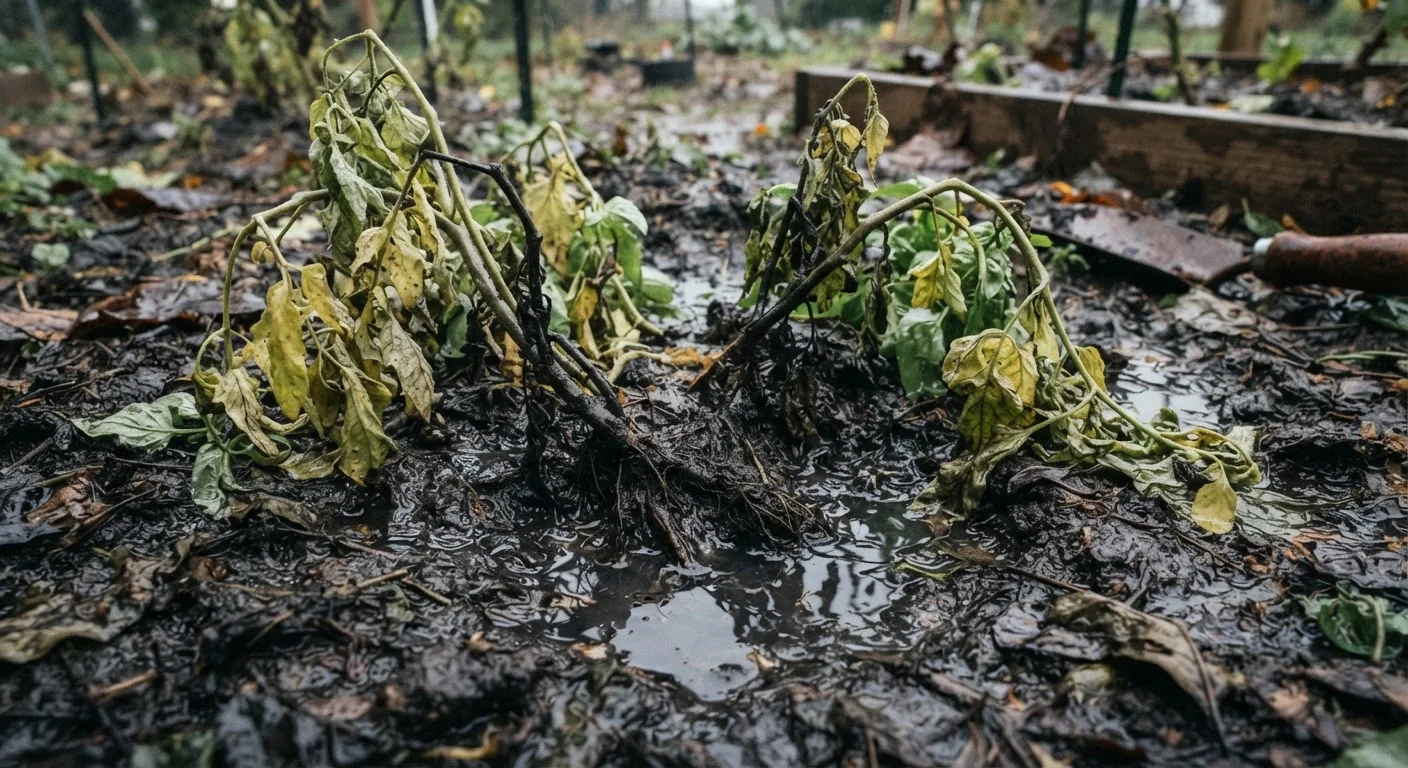
Photo credit: AdvisorHQ.net | Informative Website
In this article
Overwatering is one of the most common garden errors. Learn to recognize the signs, understand root-level damage, and water smarter.
Key Takeaways
- Overwatering is more harmful to most garden plants than mild underwatering.
- Yellowing leaves and soggy soil often signal root damage caused by excess moisture.
- Checking soil moisture before watering prevents most overwatering problems.
- Container plants and clay soils are especially vulnerable to waterlogging.
- Watering deeply but infrequently encourages stronger, deeper root systems.
Why Too Much Water Does Real Damage
Most gardeners worry about forgetting to water. Far fewer consider that the opposite habit - watering too often or too heavily - may be quietly destroying their plants from the ground up.
When soil stays saturated, oxygen is pushed out of the pore spaces roots depend on to breathe. Roots begin to decay, losing their ability to absorb both water and nutrients. The result is a plant that looks thirsty even when it's drowning. Leaves yellow, stems go limp, and growth stalls - symptoms that are easy to misread as drought stress, which can prompt even more watering and accelerate the problem.
Waterlogged soil also creates ideal conditions for soil-borne pathogens, particularly Phytophthora and Pythium species (fungal-like organisms that cause root rot). Once root rot takes hold in an established planting bed, recovery is difficult and often requires removing affected plants entirely.
Watering on a fixed daily schedule regardless of weather or soil conditions.
Why it happens: Set-it-and-forget-it routines feel reliable, and many gardeners assume consistent frequency equals consistent care.
Interpreting wilting or yellowing leaves as drought and responding with more water.
Why it happens: Wilting is the most recognizable sign of thirst, so it naturally triggers the instinct to water - even when the real cause is root damage from excess moisture.
Using pots or containers without adequate drainage holes.
Why it happens: Decorative containers are often chosen for appearance rather than function, and gardeners sometimes add a layer of gravel without realizing it does not effectively replace drainage holes.
Applying the same watering amount to every plant regardless of species or size.
Why it happens: Treating all plants equally simplifies the routine, but different species have dramatically different water needs based on their origins and growth stage.
Watering in shallow, frequent bursts that keep the top inch of soil perpetually damp.
Why it happens: Quick daily watering feels attentive, and surface soil visibly dries faster, making it seem as though plants need water again.
Reading the Real Signs Before You Water
The single most effective shift a gardener can make is to check before watering rather than watering on a fixed schedule. A finger test - pressing two inches into the soil - takes five seconds and tells you far more than a calendar does. If the soil still feels damp at that depth, the plant almost certainly does not need water yet.
Visual symptoms of overwatering are easy to confuse with other problems, which makes soil-checking essential. Watch for these patterns as early indicators:
- Leaves that yellow uniformly, starting with older growth lower on the plant
- Soft, mushy stem bases at the soil line
- A persistent sour or earthy odor from the soil surface
- Fungus gnats hovering around pots or bed edges (they breed in moist organic matter)
- Algae or green film forming on the soil surface
~50%
Of landscape water use estimated to be excessive
The U.S. Environmental Protection Agency has noted that roughly half of all outdoor water use goes to waste through overwatering and inefficient application methods.
2 inches
Ideal soil depth to check before watering
Horticultural guidelines consistently recommend probing two inches into the soil - if it still feels moist there, most plants do not yet need water.
Container gardeners face heightened risk. Pots limit drainage and trap moisture longer than open garden beds. If you grow food in containers or raised beds, check out our guide on growing food in small spaces for drainage and watering strategies suited to confined setups.
Watering Smarter Going Forward
Correcting overwatering habits involves more than cutting back on frequency. Soil type, plant selection, season, and watering method all factor into how much moisture actually reaches the root zone - and how long it stays there.
Deep, infrequent watering encourages roots to grow downward in search of moisture, producing stronger plants that handle dry spells better. Shallow, frequent watering trains roots to stay near the surface where soil dries out fastest and stress hits first.
If your yard has heavy clay soil, improving drainage through organic matter additions or raised bed construction may be necessary before watering habits alone can make a meaningful difference. Alternatively, selecting plants adapted to your local moisture conditions reduces the pressure to manage watering precisely. Native plants are often a practical choice because they are already calibrated to regional rainfall patterns.
For readers ready to move beyond guesswork, the tradeoffs between different watering methods are worth understanding - drip irrigation, soaker hoses, and hand-watering each deliver moisture differently and suit different garden layouts.
Root Rot Can Spread Quickly in Shared Beds
If one plant in a crowded bed develops root rot from overwatering, the waterlogged soil conditions and soil-borne pathogens can affect neighboring plants before symptoms appear above ground. When you identify a plant with mushy roots or stem base, remove it promptly, allow the bed to dry out, and hold off watering that area until conditions improve. Replacing affected plants before correcting drainage or watering habits is unlikely to lead to better results.

Author
Home & Garden Editorial Team
Home & Garden Editorial Team is the collective byline for our editorial team and contributor network. Articles published under this byline or an editorial pen name are researched, written, and reviewed according to our editorial standards for clarity, consistency, and independence before publication.
View all articles →