
Smart Thermostats: What They Do, What They Don't, and When They Make Sense
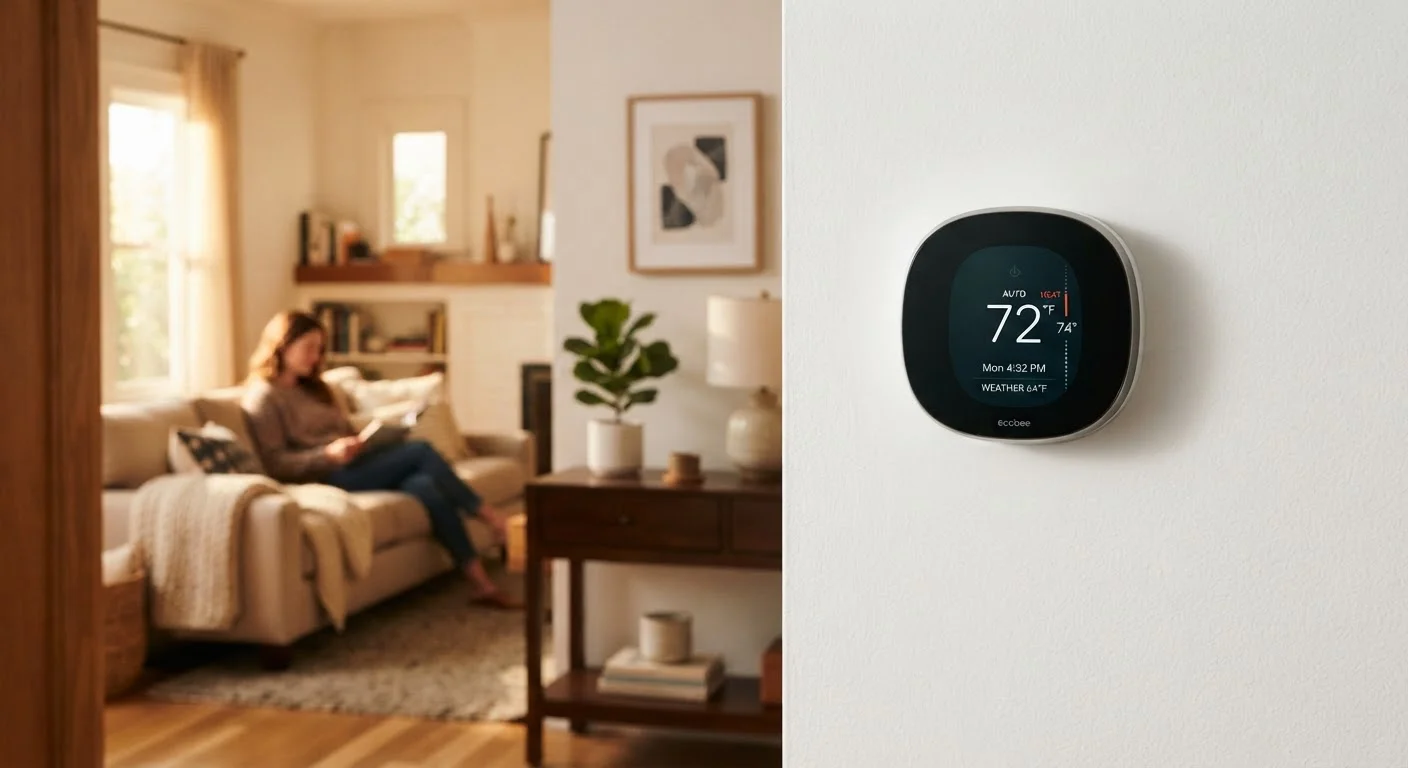
Photo credit: AdvisorHQ.net | Informative Website
In this article
Smart thermostats promise energy savings and convenience, but they're not ideal for every home. Here's an honest breakdown of the tradeoffs.
Key Takeaways
- Smart thermostats learn your schedule and adjust heating or cooling automatically to reduce wasted energy.
- They typically require a C-wire (common wire) for power - older homes may need an adapter or rewiring.
- Remote control via smartphone is a genuine convenience, but not every household will see dramatic energy savings.
- Renters, those with irregular schedules, or homes with zoned systems may find limited benefit.
- Setup and app maintenance add a learning curve that not every user will want to manage.
Automates temperature scheduling without manual programming
Learning models detect your daily patterns and adjust heating or cooling accordingly, reducing the effort required to maintain an efficient schedule.
Remote control from anywhere via smartphone
Adjusting your home's temperature before you arrive - or turning it down after you unexpectedly stay out - can meaningfully reduce energy waste on irregular days.
Detailed energy usage reporting
Most smart thermostat apps display monthly or weekly energy history, helping you identify patterns and make informed adjustments to your habits.
Integrates with voice assistants and smart home platforms
Compatibility with Amazon Alexa, Google Home, and Apple HomeKit allows thermostats to participate in broader home automations - for example, lowering the heat when your smart lock detects you've left.
Geofencing adjusts settings based on your location
When your phone leaves a defined geographic area, geofencing-enabled thermostats automatically shift to an energy-saving mode, then restore comfort settings as you return.
Requires compatible wiring not found in all homes
Without a C-wire, installation may require an adapter, a new wire run, or professional help - adding cost and complexity beyond the device's purchase price.
Upfront cost is higher than basic thermostats
Smart thermostats generally cost significantly more than standard programmable models, meaning households with modest heating and cooling bills may take years to recoup the investment.
Depends on reliable home Wi-Fi
Remote features and cloud-based scheduling stop working if Wi-Fi is down or if the thermostat's signal is weak - a real concern in larger homes or those with older routers.
Learning curve for setup and ongoing app use
Initial installation, app configuration, and periodic updates require comfort with smartphone apps and some basic troubleshooting - a barrier for less tech-confident users.
Privacy considerations with usage data collection
Smart thermostats collect data on occupancy patterns and daily routines. Reviewing the manufacturer's privacy policy and understanding data-sharing practices is a reasonable precaution.
Not compatible with all HVAC system types
Electric baseboard heaters, some boilers, and line-voltage systems are frequently incompatible with the most widely available smart thermostat models, limiting options for affected homeowners.
What a Smart Thermostat Actually Does
A smart thermostat controls your home's heating, ventilation, and air conditioning (HVAC) system - just like a traditional programmable thermostat - but adds connectivity and intelligence on top. Most models connect to your home Wi-Fi network, letting you adjust temperature from a smartphone app whether you're on the couch or across the country.
Beyond remote control, many smart thermostats use motion sensors and learning algorithms to detect when you're home, when you leave, and what temperatures you prefer at different times of day. Over days or weeks, the device builds a schedule based on your actual behavior rather than one you program manually. Some models also factor in local weather forecasts to pre-condition your home more efficiently.
To understand how these devices fit into a broader connected home, see our overview of smart home technology - it covers how devices like thermostats communicate and coordinate with each other.
Automates temperature scheduling without manual programming
Learning models detect your daily patterns and adjust heating or cooling accordingly, reducing the effort required to maintain an efficient schedule.
Remote control from anywhere via smartphone
Adjusting your home's temperature before you arrive - or turning it down after you unexpectedly stay out - can meaningfully reduce energy waste on irregular days.
Detailed energy usage reporting
Most smart thermostat apps display monthly or weekly energy history, helping you identify patterns and make informed adjustments to your habits.
Integrates with voice assistants and smart home platforms
Compatibility with Amazon Alexa, Google Home, and Apple HomeKit allows thermostats to participate in broader home automations - for example, lowering the heat when your smart lock detects you've left.
Geofencing adjusts settings based on your location
When your phone leaves a defined geographic area, geofencing-enabled thermostats automatically shift to an energy-saving mode, then restore comfort settings as you return.
The Real Drawbacks Worth Knowing
Smart thermostats aren't a universal upgrade. Several limitations affect whether they're worth it for a given household.
The most common installation hurdle is the C-wire (common wire), which provides continuous power to the thermostat. Many homes built before the 1990s lack one. Some manufacturers offer adapter kits, but these add complexity and don't always work cleanly with every HVAC setup. When in doubt, a licensed HVAC technician can assess your wiring before you buy.
Wi-Fi dependency is another factor. Smart thermostats rely on a stable home network to deliver their connected features. If your router is far from your thermostat, signal dropout can interrupt scheduling and remote access. Our guide to smart home wireless protocols explains how connectivity standards affect device reliability throughout your home.
Requires compatible wiring not found in all homes
Without a C-wire, installation may require an adapter, a new wire run, or professional help - adding cost and complexity beyond the device's purchase price.
Upfront cost is higher than basic thermostats
Smart thermostats generally cost significantly more than standard programmable models, meaning households with modest heating and cooling bills may take years to recoup the investment.
Depends on reliable home Wi-Fi
Remote features and cloud-based scheduling stop working if Wi-Fi is down or if the thermostat's signal is weak - a real concern in larger homes or those with older routers.
Learning curve for setup and ongoing app use
Initial installation, app configuration, and periodic updates require comfort with smartphone apps and some basic troubleshooting - a barrier for less tech-confident users.
Privacy considerations with usage data collection
Smart thermostats collect data on occupancy patterns and daily routines. Reviewing the manufacturer's privacy policy and understanding data-sharing practices is a reasonable precaution.
Not compatible with all HVAC system types
Electric baseboard heaters, some boilers, and line-voltage systems are frequently incompatible with the most widely available smart thermostat models, limiting options for affected homeowners.
Energy Savings: Realistic Expectations
Manufacturers and independent researchers generally agree that smart thermostats can reduce heating and cooling costs - but the range of savings is wide. The U.S. Environmental Protection Agency notes that programmable thermostats, used correctly, can save around 10% annually on heating and cooling bills. Smart models that automate that programming may improve on those results for households that previously left thermostats at a fixed temperature all day.
The key phrase is used correctly. Households that are home most of the day, or those already using a well-configured schedule on a standard thermostat, may see minimal additional savings. The biggest gains tend to go to people who previously made few or no manual adjustments - the thermostat's automation fills a gap that was costing them money.
~10%
Potential annual HVAC savings
The U.S. Environmental Protection Agency suggests properly used programmable thermostats can cut heating and cooling costs by around 10% per year.
~50%
Share of U.S. home energy use from HVAC
According to the U.S. Energy Information Administration, heating and cooling account for roughly half of a typical American home's total energy consumption.
If you're building out a broader smart home and want to understand where a thermostat fits in your overall setup, our room-by-room smart home starting guide can help you prioritize devices.
When a Smart Thermostat Makes Sense - and When It Doesn't
Smart thermostats are a good fit for homeowners with a conventional single-zone HVAC system, a reasonably predictable weekly routine, and a home Wi-Fi network that reaches the thermostat location. If you travel frequently or work away from home during set hours, the automation and remote access features deliver clear, practical value.
They're a weaker fit in several situations:
- Renters typically can't install or replace thermostats without landlord permission, and the device stays with the property when you move.
- Multi-zone HVAC systems may require one smart thermostat per zone, multiplying cost and complexity.
- Highly irregular schedules - such as shift workers, remote workers always home, or households with varying occupancy - may not allow the learning algorithms to build an accurate or useful routine.
- Older heating systems (certain boilers, electric baseboard heaters, or line-voltage setups) are often incompatible with common smart thermostat models.
Before purchasing, verify compatibility using the manufacturer's wiring checker tool - most brands offer one online. For unfamiliar terminology like "C-wire," "HVAC zones," or "heat pump," our smart home glossary is a useful reference.
Check Compatibility Before You Buy
Most smart thermostat manufacturers provide an online compatibility checker where you enter your current thermostat's wiring configuration. Running this check before purchasing can save a frustrating return. If your system uses a heat pump, dual-fuel setup, or has more than five wires, double-checking with an HVAC professional is a worthwhile step. Security considerations also apply once your thermostat is connected to your home network - our guide to smart home security covers practical steps to keep connected devices protected.

Author
Tech & Gadgets Editorial Team
Tech & Gadgets Editorial Team is the collective byline for our editorial team and contributor network. Articles published under this byline or an editorial pen name are researched, written, and reviewed according to our editorial standards for clarity, consistency, and independence before publication.
View all articles →