
Streaming vs. Cable: What You Actually Give Up and What You Gain
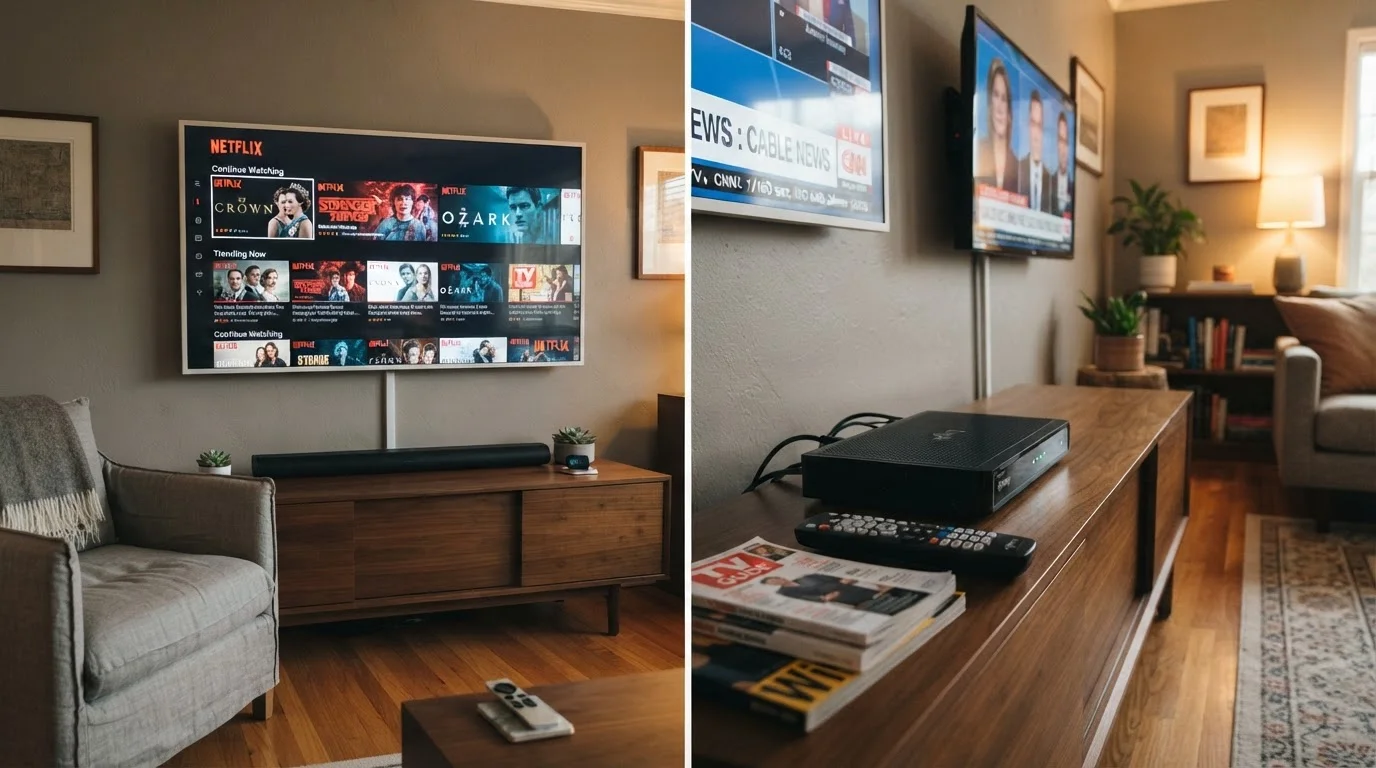
Photo credit: AdvisorHQ.net | Informative Website
In this article
A balanced look at what streaming and traditional cable each do well — and where each one falls short for everyday American households.
Key Takeaways
- Streaming offers on-demand flexibility but requires a reliable broadband connection to work well.
- Cable delivers live TV and local channels reliably, but typically locks you into bundled packages and contracts.
- Subscribing to multiple streaming services can push monthly costs close to or above a cable bill.
- Sports and breaking news remain the strongest arguments for keeping a cable connection.
- Neither option is universally better - your household's viewing habits should drive the decision.
How Each System Actually Works
Cable TV delivers video through a physical coaxial cable connected to your home. Your provider bundles dozens - sometimes hundreds - of channels into a package, and your TV or cable box decodes that signal in real time. You pay a monthly fee for access to that bundle regardless of which channels you actually watch.
Streaming services work differently. Content is hosted on remote servers and delivered over your home's broadband internet connection whenever you request it. There's no physical cable dedicated to video; instead, your router and internet speed determine the quality of what you see. Most streaming platforms use an app - on a smart TV, a plug-in stick, or a standalone box. If you're curious how those delivery devices compare, see our guide to streaming sticks, boxes, and smart TVs.
The technical difference matters practically: cable works even during internet outages, while streaming goes dark the moment your broadband does.
| Criterion | Streaming Services | Traditional Cable TV |
|---|---|---|
| Contract required | Usually none (month-to-month) | Often 1-2 year contracts |
| Live TV access | Limited; add-ons often required | Comprehensive, included in package |
| Local broadcast channels | Varies; may need antenna or add-on | Included as standard |
| On-demand content | Extensive libraries | Limited; varies by provider |
| Dependence on internet speed | Yes - broadband required | No - independent signal |
| Entry-level monthly cost | Lower per service; stacks up | Higher single bill, all-in |
| Equipment needed | Smart TV, stick, or box | Cable box (often rented) |
| Ability to cancel easily | Generally yes | May involve fees |
What You Gain With Streaming - and What You Lose
The clearest win with streaming is on-demand access. You're not scheduled around a broadcast. You pause, rewind, binge, or stop entirely - on your terms. Pricing typically starts lower than cable, and month-to-month subscriptions mean no long-term contract tying you down.
Content variety has grown substantially. Original series, international films, documentaries, and niche genres that would never survive a cable timeslot are widely available. That said, content libraries are more complicated than they appear. Licensing agreements mean titles rotate in and out, and what's available can vary by region. Our article on what streaming platforms don't tell you about their libraries explains how this works behind the scenes.
The downsides are real. Live TV coverage is fragmented. Local broadcast channels, regional sports networks, and breaking news events often require separate add-on packages or a live TV streaming tier that costs significantly more than a basic subscription. And if your household subscribes to four or five services to fill in the gaps, the combined monthly bill can rival or exceed a cable package.
~73%
U.S. households with at least one streaming subscription
According to Pew Research Center data, the majority of American households subscribe to at least one paid streaming video service.
4+
Average streaming services per subscribing household
Industry research suggests households that stream frequently maintain multiple active subscriptions at the same time, raising combined costs.
~$83/mo
Estimated average U.S. pay-TV (cable/satellite) monthly bill
Estimates from industry analysts place the average American cable or satellite bill above $80 per month, excluding internet service.
What Cable Still Does Better
Cable's strongest case is live programming. Local news, weather alerts, live sports, and appointment television like award shows are all delivered in real time without buffering concerns or app-switching. For households where Saturday afternoon college football or weeknight local news is the centerpiece of TV time, cable remains the more straightforward solution.
Reliability is another underappreciated advantage. Cable signal doesn't fluctuate with your household's internet traffic. Streaming a 4K film while someone else video-calls and another person games online can noticeably degrade picture quality. Cable sidesteps that problem entirely.
Where cable loses ground is flexibility. Packages are bundled - you pay for channels whether you watch them or not. Contracts are common, and early termination fees apply. Equipment rental fees (for the cable box itself) add to monthly costs. Customer service experiences with large cable providers are widely reported as inconsistent, though individual experiences vary.
A Note on Skinny Bundles and Hybrid Options
A middle-ground option has grown in recent years: live TV streaming services (sometimes called 'virtual MVPDs' or 'skinny bundles') deliver cable-style channel packages over the internet without requiring a physical cable subscription. These services can include local channels, sports, and news - but they come with their own pricing tiers, device limitations, and channel availability that varies by region. They're worth considering if you want live TV flexibility without a traditional cable contract, though costs can be comparable to entry-level cable packages depending on the tier you choose.
The Real Cost Comparison
On paper, a single streaming subscription looks far cheaper than a cable package. In practice, most households don't stop at one service. When you add up several streaming subscriptions - particularly if any include live TV tiers - the total can close the gap considerably.
Cable bills also vary widely depending on promotional pricing, bundling with internet service, and regional provider differences. Many households already pay for broadband internet, which is required for streaming but is also frequently bundled with cable TV. Separating those costs matters when making a real comparison.
Before subscribing to a new streaming service, it's worth understanding what you're actually signing up for. Our overview of what to know before subscribing to a streaming service covers the details most people overlook, including cancellation terms and simultaneous stream limits. And if you're new to streaming entirely, our first-time setup walkthrough can get you started without confusion.

Author
Tech & Gadgets Editorial Team
Tech & Gadgets Editorial Team is the collective byline for our editorial team and contributor network. Articles published under this byline or an editorial pen name are researched, written, and reviewed according to our editorial standards for clarity, consistency, and independence before publication.
View all articles →