
Your Car's Maintenance Schedule, Explained
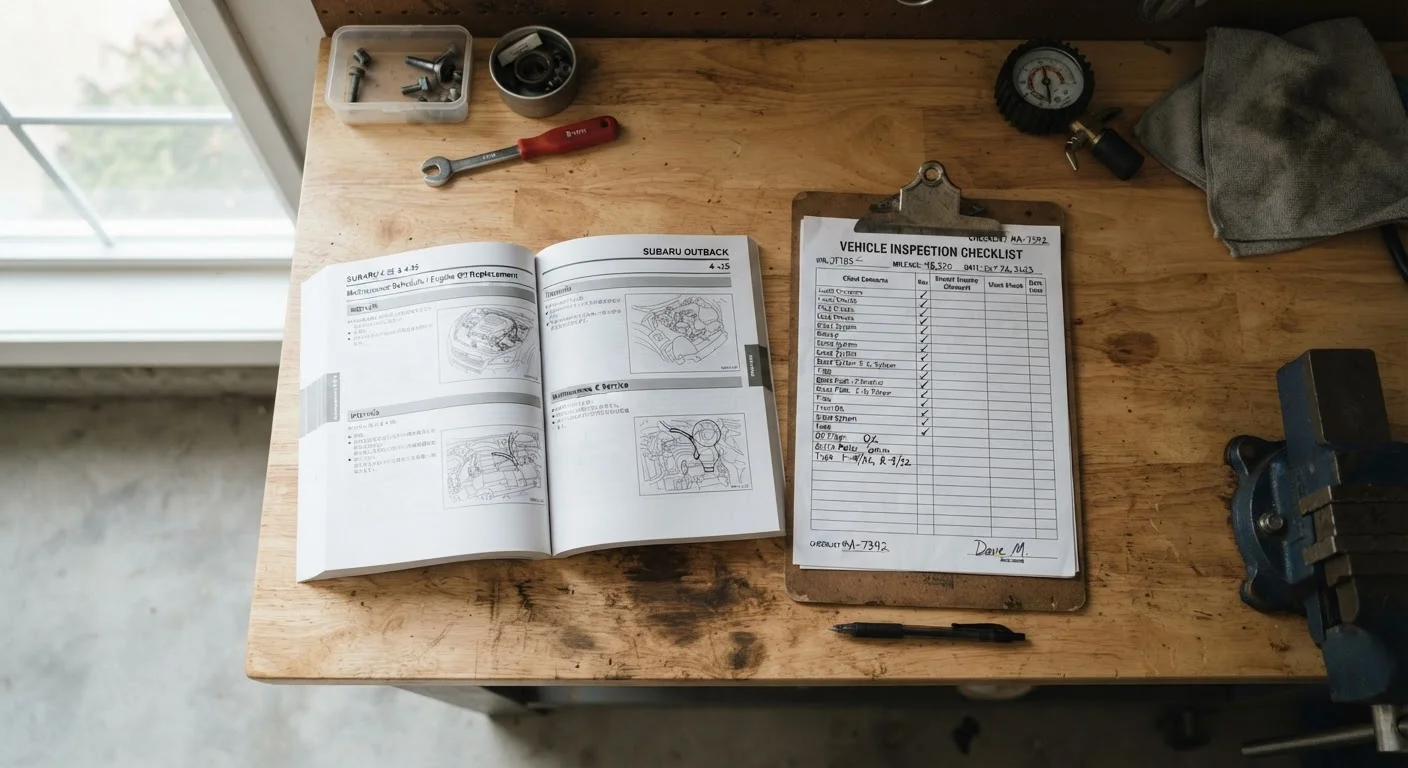
Photo credit: AdvisorHQ.net | Informative Website
In this article
Mileage intervals, service milestones, and what each one actually does for your vehicle—decoded for everyday drivers.
Key Takeaways
- Your owner's manual contains the only maintenance schedule you should follow for your specific vehicle.
- Services are triggered by mileage, time elapsed, or whichever comes first - not just miles alone.
- Skipping scheduled maintenance can void warranties and lead to significantly larger repair costs.
- "Severe" driving conditions require more frequent service than the standard schedule suggests.
- Keeping a written service record protects your vehicle's resale value and ownership history.
Why a Maintenance Schedule Exists
Every component in your vehicle - from the engine oil to the brake fluid - degrades over time and use. A maintenance schedule is your manufacturer's evidence-based plan for replacing or inspecting those components before they cause problems, not after. It reflects thousands of hours of engineering testing on your specific engine, drivetrain, and climate assumptions.
The schedule isn't a upsell tool or a general guideline. It's the single most authoritative source for keeping your car in the condition its designers intended. Ignoring it doesn't just risk a breakdown - it can accelerate wear across interconnected systems, turning a modest service cost into a major repair bill. For a closer look at how skipped maintenance compounds into larger expenses, see routine maintenance that keeps repair bills from spiraling.
~$0.09/mile
Average cost of routine vehicle maintenance
AAA's annual 'Your Driving Costs' study estimates maintenance costs for an average new vehicle; consistent servicing keeps per-mile costs predictable.
35%
Drivers who admit to delaying scheduled maintenance
Consumer surveys consistently find a significant share of drivers postpone at least one recommended service annually, often citing cost or inconvenience.
60,000 mi
Typical timing belt replacement interval
Many manufacturers recommend timing belt replacement between 60,000 and 100,000 miles; a failure before replacement can cause irreparable engine damage.
How Intervals Are Measured
Maintenance intervals are expressed in miles, months, or both - and the rule is always whichever comes first. A vehicle driven mostly on highways may hit a mileage milestone before a time limit, while one sitting in a driveway through a cold winter will hit a time limit first. Oil, brake fluid, and coolant all degrade chemically even without significant mileage.
Common interval structures you'll encounter include:
- Every 5,000-10,000 miles: Oil and filter change (interval varies widely by vehicle and oil type)
- Every 15,000-30,000 miles: Air filter inspection or replacement, cabin air filter, tire rotation
- Every 30,000-60,000 miles: Spark plugs (on most gasoline engines), brake fluid flush, transmission fluid check
- Every 60,000-100,000+ miles: Timing belt replacement (if applicable), coolant flush, accessory drive belts
These ranges are illustrative. Your specific intervals may differ significantly - always verify against your owner's manual. For a detailed breakdown of oil change intervals specifically, see what the numbers in your owner's manual really mean.
What Each Service Category Actually Does
Understanding why a service exists makes it easier to prioritize and catch when something seems off. Here's what the major categories accomplish:
- Engine oil and filter
- Oil lubricates moving parts and carries heat away from the engine. Over time it breaks down and accumulates contaminants. The filter removes particles but eventually becomes saturated. Fresh oil and a clean filter prevent metal-on-metal wear.
- Coolant (antifreeze) flush
- Coolant prevents the engine from overheating and from freezing in cold weather. It also contains corrosion inhibitors that deplete over time, leaving the cooling system vulnerable to rust and scale buildup.
- Brake fluid flush
- Brake fluid is hygroscopic - it absorbs moisture from the air over time. Water in the brake system lowers the boiling point of the fluid, which can cause brake fade under heavy use. Flushing restores performance and protects internal brake components.
- Spark plugs
- Worn plugs misfire, reduce fuel efficiency, and stress the ignition coils. Modern iridium or platinum plugs often last 60,000-100,000 miles, but the replacement interval still varies by vehicle.
- Timing belt
- Not all vehicles have one - many modern engines use a timing chain instead. For those that do, a broken timing belt can cause severe, often irreparable engine damage. This is one service that should never be deferred past the recommended interval.
“The owner's manual is the most underused document in most households. Every driver should read at least the maintenance schedule section - it's the manufacturer telling you exactly what the vehicle needs to last.”
— Cars & Driving Editorial Team, Automotive maintenance guidance editors
Normal vs. Severe Driving Conditions
Owner's manuals typically print two maintenance schedules side by side. The standard schedule assumes relatively mild, mixed driving. The severe schedule applies when your vehicle regularly experiences conditions that accelerate wear - and more drivers qualify for the severe schedule than they expect.
Severe conditions typically include: frequent trips of five miles or less (where the engine never fully warms up), towing or hauling, driving in sustained stop-and-go traffic, operating in extreme heat or sub-freezing temperatures, and driving on dirt or gravel roads. In these situations, engine oil, filters, and transmission fluid reach their service limits sooner. Check your manual's specific definition, since manufacturers define severity differently.
If you're unsure whether your driving habits qualify, erring toward shorter intervals for critical fluids like engine oil is a reasonable approach - though it's worth separating that caution from outdated myths. Our piece on common car maintenance myths addresses some widely held but inaccurate assumptions about how often service is truly needed.
Staying on Top of Your Schedule
The most practical system is one you'll actually use. Here's a straightforward approach:
- Locate your owner's manual schedule. If you've lost the manual, most manufacturers offer digital versions on their official websites, searchable by VIN or vehicle specs.
- Note your current mileage and the last recorded service. This tells you immediately which services are due or overdue.
- Set calendar reminders. If your oil change is due every 7,500 miles and you drive roughly 1,500 miles per month, a five-month reminder keeps you on track without guesswork.
- Keep a service log. Record every service - date, mileage, what was done, and who performed it. This protects warranty claims and boosts resale value. Keeping good maintenance records explains exactly what to document and why it matters.
Some services are well within reach for a careful DIYer; others genuinely require professional tools and expertise. For a clear-eyed breakdown of where that line falls, see DIY car maintenance: where it makes sense and where to stop. And when your dashboard flags something unexpected between scheduled services, understanding your dashboard warning lights can help you assess urgency before your next shop visit.
Frequently Asked Questions

Author
Cars & Driving Editorial Team
Cars & Driving Editorial Team is the collective byline for our editorial team and contributor network. Articles published under this byline or an editorial pen name are researched, written, and reviewed according to our editorial standards for clarity, consistency, and independence before publication.
View all articles →