
Reading a Mechanic's Estimate Without Getting Lost
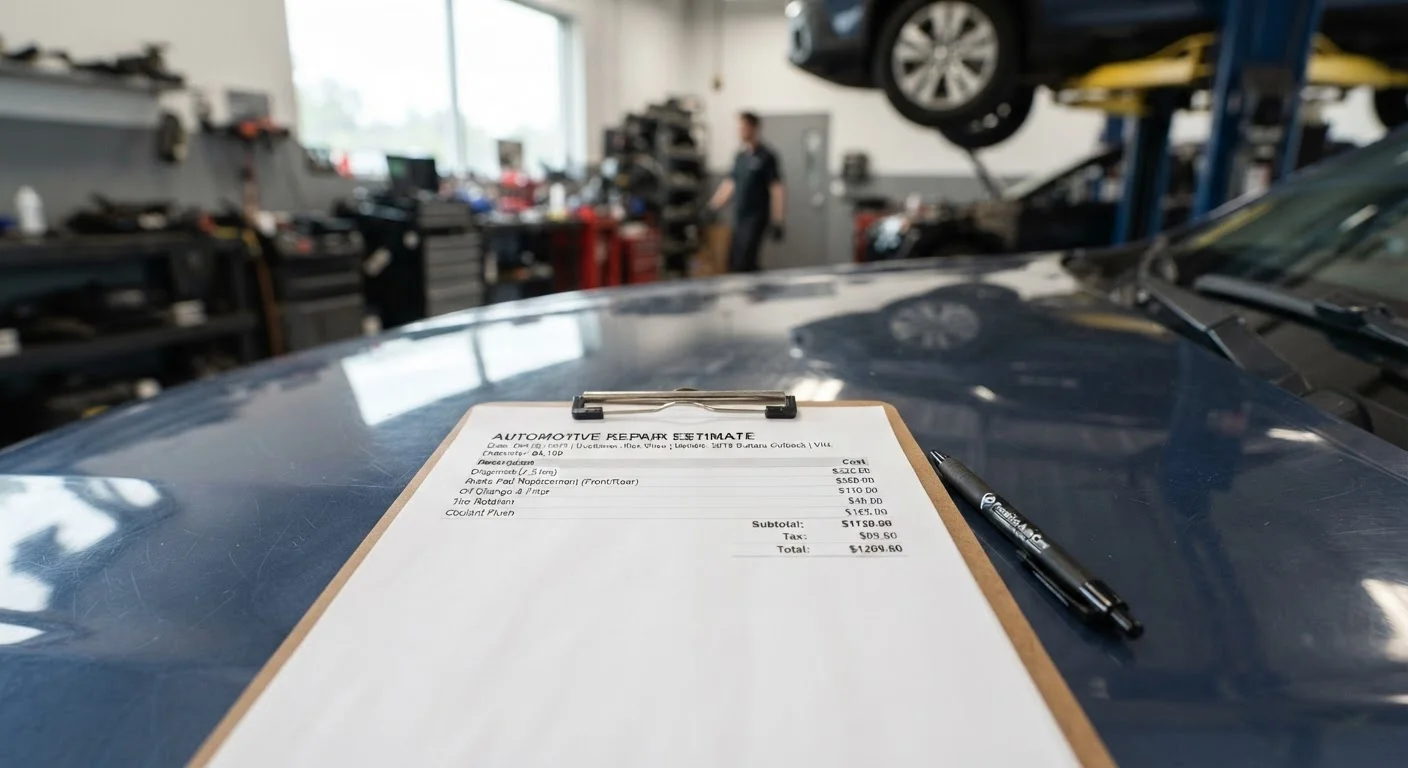
Photo credit: AdvisorHQ.net | Informative Website
In this article
Labor hours, OEM vs. aftermarket parts, diagnostic fees—a plain-language guide to what repair estimates actually contain.
Key Takeaways
- An estimate is a cost projection, not a guaranteed final price - ask whether it is binding.
- Labor charges are based on standardized 'flat-rate' hours, not necessarily the actual time spent.
- OEM parts come from the original manufacturer; aftermarket parts are made by third parties and vary in quality.
- Diagnostic fees cover the technician's time to identify the problem and are often legitimate charges.
- You have the right to request a written, itemized estimate before any work begins in most U.S. states.
- Asking the shop to return old parts is a simple way to confirm the work was actually done.
What an Estimate Is (and What It Isn't)
A repair estimate is a shop's projected cost to diagnose and fix a specific problem with your vehicle. It is not necessarily a locked-in price. Estimates can be binding - meaning the shop commits to that price - or non-binding, meaning the final bill may differ if unexpected issues surface during the repair.
Before authorizing any work, ask explicitly: Is this a binding or non-binding estimate? Most states give consumers the legal right to a written estimate for repairs above a certain dollar threshold, and shops are generally required to contact you for approval before exceeding it. Knowing this upfront removes the biggest source of sticker shock at pickup.
Understanding estimates is part of the broader picture of what vehicles actually cost to own. See what car ownership really costs for context on where repair bills fit into the full expense picture.
Binding estimate
A written quote the shop agrees to honor as the final price, regardless of how long the actual repair takes.
Flat-rate labor
A standard number of hours assigned to a specific repair job by industry labor guides, used to calculate labor charges regardless of actual time spent.
OEM part
A component made by or to the exact specifications of the vehicle's original manufacturer, ensuring a guaranteed fit and performance standard.
Aftermarket part
A replacement component made by a third-party manufacturer; quality and price vary widely across different aftermarket suppliers.
Diagnostic fee
A charge covering the technician's time and tools used to identify the root cause of a vehicle problem before any repair work begins.
Shop supplies fee
A small charge on repair bills covering consumable materials used during the job, such as cleaning fluids and disposal of old parts or fluids.
Breaking Down the Line Items
Most estimates share a common structure. Once you recognize the categories, the document becomes much easier to read.
- Parts: The cost of every physical component the shop plans to install. Each part should be listed individually with its price.
- Labor: The charge for the technician's time, calculated using a flat-rate system. Industry labor guides assign a standard number of hours to each type of job. The shop multiplies those hours by its hourly labor rate - which commonly ranges from under $100 to over $150 depending on the region and shop type - to produce the labor charge.
- Shop supplies / environmental fees: Small charges covering consumables like rags, cleaning solvents, and disposal of fluids. These are often a percentage of the total bill.
- Taxes: Applied to parts in most states, and sometimes to labor depending on local law.
If any line item is vague - listed only as "misc. parts" with no breakdown - ask the service writer to itemize it. A reputable shop should have no objection.
OEM vs. Aftermarket Parts: What the Difference Means for You
OEM stands for Original Equipment Manufacturer. OEM parts are made by - or to the exact specifications of - the company that built your vehicle. They are generally more expensive but are guaranteed to fit and meet the manufacturer's performance standards.
Aftermarket parts are produced by third-party manufacturers. Quality varies significantly across aftermarket suppliers. Some aftermarket components meet or exceed OEM standards; others do not. Price is often lower, but so is the certainty of fit and longevity.
For safety-critical components - brake pads, rotors, steering parts, airbag sensors - it is reasonable to ask about the specific brand and quality tier of any aftermarket part being proposed. For less critical items like cabin air filters, the cost savings of aftermarket may outweigh the risk. Your mechanic should be willing to explain the tradeoff for each specific part on the estimate.
Ask About Parts Warranty Before You Agree
Both OEM and aftermarket parts can come with manufacturer warranties, but coverage periods and terms differ. Before approving an estimate, ask specifically what warranty covers each part and get the answer in writing. A good shop will provide this information without hesitation.
Diagnostic Fees and Why They Exist
When you bring a car in with a symptom - a warning light, a noise, a performance issue - the technician must first identify the root cause before any repair can begin. This diagnostic work takes time, specialized tools, and expertise. Shops charge a diagnostic fee to cover that labor.
A diagnostic fee is not a sign of overcharging; it reflects real work performed. However, it is worth asking whether the fee will be credited toward the repair cost if you proceed with the work at that shop. Many shops apply the diagnostic charge as a credit - meaning you effectively pay it as part of the overall repair rather than on top of it.
If the diagnosis reveals the repair is too costly and you decline, you will typically still owe the diagnostic fee. Knowing this helps you make an informed choice about where to start. Staying on top of your vehicle's maintenance schedule can reduce the likelihood of unexpected diagnostic visits in the first place.
Questions Worth Asking Before You Approve the Work
A written estimate is the starting point of a conversation, not a document to simply sign. These questions help you engage as an informed customer:
- Is this estimate binding? If not, what is the maximum the final bill could reach before you need to be contacted?
- Are these OEM or aftermarket parts? If aftermarket, what brand and what warranty comes with them?
- What warranty covers the labor? Many shops offer a warranty on both parts and workmanship - ask for the terms in writing.
- Can I see the old parts? Requesting the replaced components is a simple way to confirm the work was done.
- Is this repair urgent, or can it wait? Not every flagged issue is an immediate safety concern. Understanding the priority helps you plan.
Knowing when a repair is beyond DIY territory is equally important. Understanding what you can handle at home versus what a qualified technician should manage keeps both you and your vehicle safe. And if you want to reduce how often you find yourself in the repair shop at all, consistent routine maintenance is the most reliable strategy.
Frequently Asked Questions

Author
Cars & Driving Editorial Team
Cars & Driving Editorial Team is the collective byline for our editorial team and contributor network. Articles published under this byline or an editorial pen name are researched, written, and reviewed according to our editorial standards for clarity, consistency, and independence before publication.
View all articles →