
What Your Dashboard Warning Lights Are Actually Telling You
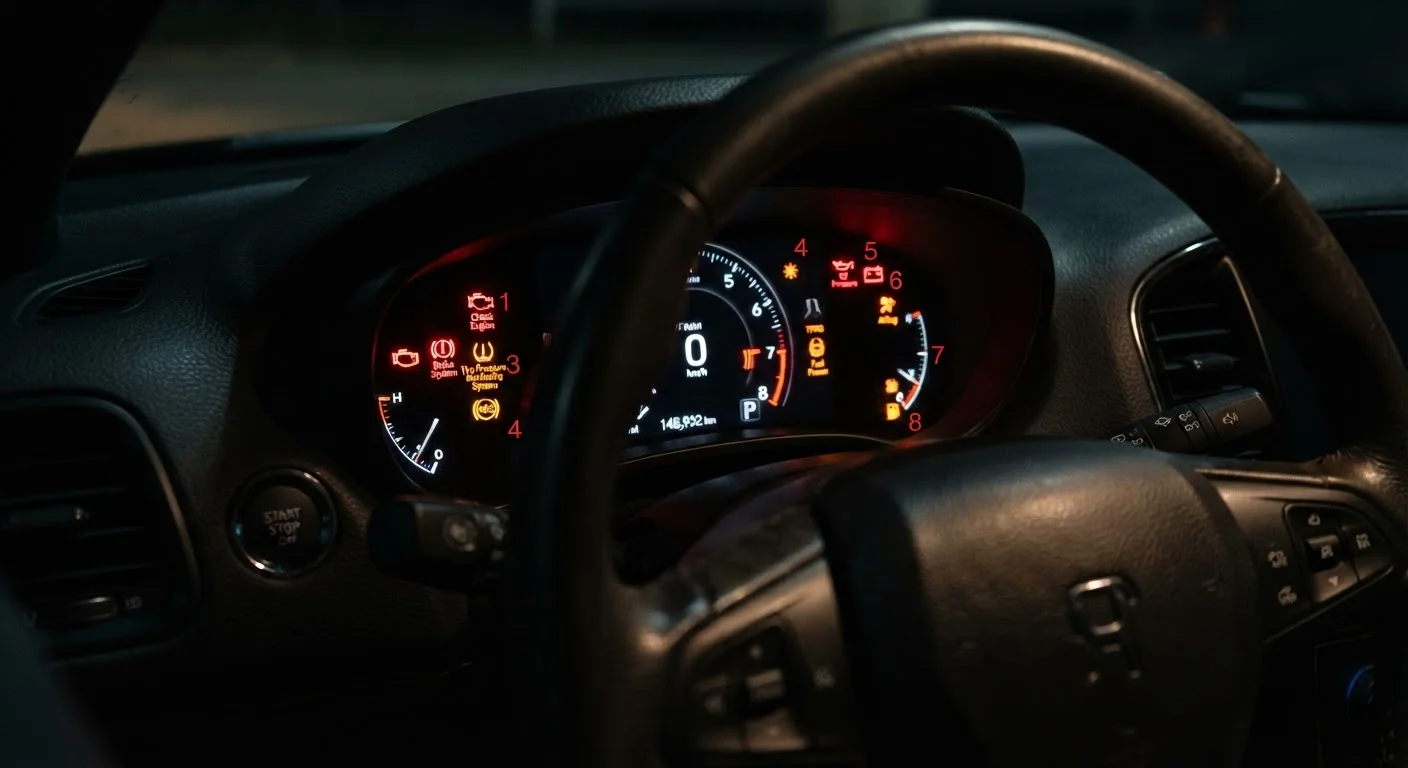
Photo credit: AdvisorHQ.net | Informative Website
In this article
A practical reference to common dashboard symbols—what each one means, how urgent it is, and what to do next.
Why Dashboard Lights Exist - and Why Color Matters
Modern vehicles are equipped with an onboard diagnostics system that continuously monitors dozens of sensors. When something falls outside normal parameters, the system signals you through dashboard warning lights. Ignoring them can turn a minor issue into an expensive repair - or worse, a safety hazard on the road.
The color of a warning light is the fastest shorthand for urgency. Red lights indicate a condition requiring immediate attention - continued driving may cause vehicle damage or create a safety risk. Yellow or amber lights signal that something needs attention soon but is not necessarily an emergency. Green and blue lights are informational, simply confirming that a system is active.
For a broader view of how these alerts fit into your overall vehicle care routine, see Your Car's Maintenance Schedule, Explained for a breakdown of what each service milestone actually does.
OBD-II (Onboard Diagnostics)
A standardized system built into most vehicles sold after 1996 that monitors engine and emissions components. When a fault is detected, it stores a diagnostic trouble code (DTC) and triggers the check engine light.
Fault Code / DTC
A numeric code stored by the vehicle's computer when a sensor reading falls outside acceptable limits. A mechanic uses a scan tool to retrieve and interpret these codes.
TPMS (Tire Pressure Monitoring System)
A sensor-based system that alerts the driver when tire pressure drops significantly below the recommended level, typically 25% or more below specification.
Charging System
The combination of the alternator and battery that keeps a vehicle's electrical systems powered while the engine runs. A failing charging system triggers the battery warning light.
Traction Control System (TCS)
An active safety system that reduces wheel spin during acceleration on slippery surfaces by applying brakes or reducing engine power to individual wheels.
Electronic Stability Control (ESC)
A safety system that automatically applies selective braking to individual wheels to help the driver maintain control during oversteer or understeer situations.
The Most Common Warning Lights Decoded
Knowing what each symbol represents removes the guesswork when a light appears.
| Number of warning lights (typical modern vehicle) | 50-200+ symbols (Varies by make, model, and trim level) |
| Red light action | Stop or seek immediate service |
| Amber light action | Schedule service soon; monitor symptoms |
| Check engine light: most common cause | Loose or faulty gas cap (Frequently cited by automotive repair data aggregators) |
| TPMS trigger threshold | ~25% below recommended tire pressure (U.S. NHTSA TPMS standard) |
| OBD-II standard required since | 1996 (all U.S. passenger vehicles) (U.S. EPA regulation) |
Red Lights: Act Promptly
- Engine Temperature (thermometer in water): Your engine is overheating. Pull over safely, shut off the engine, and do not open the radiator cap. See Signs Your Coolant System Needs Attention for early warning indicators.
- Oil Pressure (oil can): Engine oil pressure has dropped critically. Stop driving immediately. Running a low-pressure engine even briefly can cause severe internal damage.
- Battery (battery outline): The charging system is failing. Your vehicle is running on battery reserve only - electrical systems will begin shutting down. Head to a service facility without delay.
- Brake System (exclamation in circle or "BRAKE"): Could indicate low brake fluid, a system failure, or the parking brake is engaged. Confirm the parking brake is released first; if the light stays on, treat it as urgent.
Amber Lights: Schedule Attention Soon
- Check Engine (engine outline): A fault code has been stored in the vehicle's computer. The cause ranges from a loose gas cap to a misfiring cylinder. Have a mechanic read the code before assuming the worst.
- Tire Pressure (tire with exclamation): One or more tires is significantly under- or over-inflated. Check pressures when tires are cold and inflate to the specification on the driver's door jamb, not the tire sidewall.
- Traction Control / Stability Control (car with squiggly lines): These systems are actively intervening, or the system has been disabled. On slippery roads, this is normal; if the light stays on in dry conditions, have the system inspected.
- Transmission Temperature: Transmission fluid is overheating. Reduce load (exit highways, stop towing) and allow the vehicle to cool.
If a fluid-related light appears, reviewing Fluids Under the Hood can help you identify whether a top-off is appropriate before your next service visit.
What to Do When a Light Comes On
Your response should match the light's urgency level, not your anxiety level. Here's a reliable decision framework:
- Identify the color first. Red means stop or seek help promptly. Amber means monitor and schedule service. Blue or green means a system is simply active.
- Check for obvious conditions. Is the parking brake engaged? Is the gas cap loose? Correcting these takes seconds and can extinguish a warning light without a shop visit.
- Avoid ignoring persistent lights. A check engine light that stays on through multiple drive cycles has stored a fault code. A mechanic's scan tool can retrieve it in minutes.
- Know when to stop driving. Oil pressure and engine temperature lights are non-negotiable - continuing to drive risks destroying the engine.
For a clear picture of which follow-up tasks are safe to handle yourself and which warrant a professional, see DIY Car Maintenance: Where It Makes Sense and Where to Stop. And for general safe driving awareness, the Driving & Safety hub covers road habits that complement good vehicle maintenance.
This article is for general informational purposes only. Dashboard warning light behavior varies by vehicle make, model, and year. Always consult your owner's manual or a qualified mechanic for guidance specific to your vehicle.

Author
Cars & Driving Editorial Team
Cars & Driving Editorial Team is the collective byline for our editorial team and contributor network. Articles published under this byline or an editorial pen name are researched, written, and reviewed according to our editorial standards for clarity, consistency, and independence before publication.
View all articles →