
Highway Merging Done Right
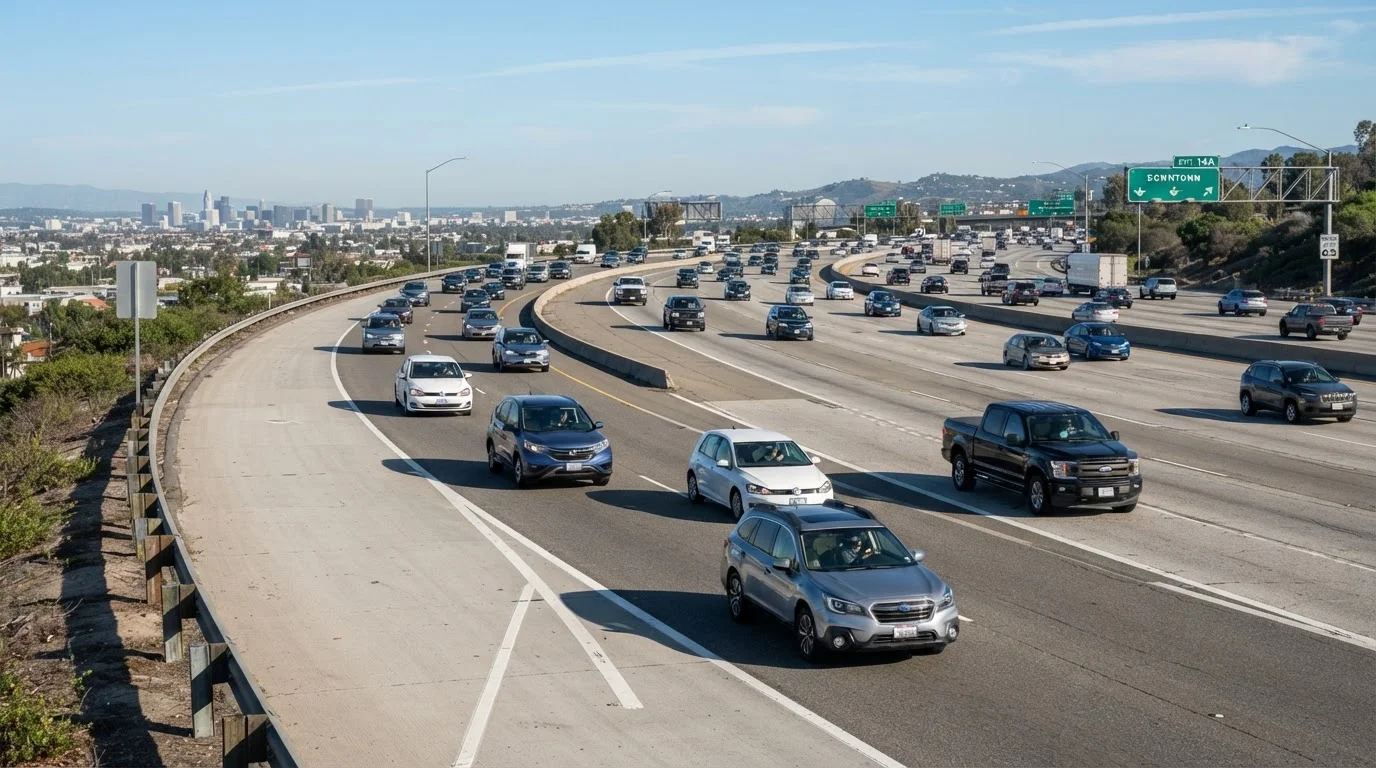
Photo credit: AdvisorHQ.net | Informative Website
In this article
Merging onto a highway is one of the most misunderstood maneuvers in everyday driving. Here's what good technique actually looks like.
Key Takeaways
- Use the full length of the on-ramp to match highway traffic speed before merging.
- Identify your target gap early - ideally three to four seconds of following distance.
- Signal your intent before you need the space, not after you've committed.
- Never stop at the end of a merge ramp unless absolutely unavoidable.
- Blind spot checks are essential at merge speed - mirrors alone are not enough.
Why Highway Merging Goes Wrong
Merging onto a highway is a deceptively simple-looking maneuver that combines speed management, spatial judgment, and communication into one continuous sequence. Most merge errors stem from one of three root causes: failing to reach highway speed before the merge point, choosing a gap too late, or skipping the blind spot check at the critical moment.
A poorly executed merge doesn't just inconvenience other drivers - it triggers the chain-reaction braking events that contribute to rear-end collisions, which are among the most common crash types on U.S. highways. Understanding the mechanics of a correct merge is a foundational piece of defensive driving, not an advanced skill reserved for experienced motorists.
What you will need
If you are new to interstate driving altogether, you may also find it useful to read our overview of driving on the interstate for the first time before working through the steps below.
Tools and Preparation Before You Merge
Properly Adjusted Side Mirrors
Reduce blind spots along the driver and passenger sides to aid in identifying gaps in highway traffic.
Turn Signals
Communicate merge intent to both highway drivers and vehicles behind you on the ramp.
Before attempting a highway merge, confirm your mirrors are correctly adjusted. The side mirrors should be angled so that you can just barely see the rear corner of your own vehicle - any wider and you are duplicating the coverage your rearview mirror already provides, leaving a larger blind zone alongside the car. For a detailed look at mirror limitations, see what mirrors miss and how to fill the gap.
Communicate Early to Help Highway Drivers Help You
Activating your turn signal early signals to highway drivers that you intend to merge. A courteous highway driver may adjust their speed or change lanes to create space - but only if they know you're coming. Think of your signal as a conversation starter, not a formality you complete at the last second.
Step-by-Step: Executing a Safe Merge
Start Reading the Highway from the Ramp Entrance
As soon as you enter the on-ramp, look ahead toward the highway lanes. Identify the density and speed of traffic. Note whether vehicles in the right lane are clustered tightly or spaced generously. This early scan tells you how aggressively you need to accelerate and whether a gap will be available when you arrive at the merge point.
Accelerate Continuously Through the Ramp Curve
Many drivers instinctively slow down through the curved portion of the on-ramp. This is counterproductive. Provided the curve can be taken safely at gradually increasing speed, begin building momentum through it rather than waiting for the straight section. By the time you exit the curve, you should already be approaching the posted highway speed.
Activate Your Turn Signal Before You Need the Space
Signal your merge intent while you are still on the ramp - not when you reach the painted merge line. Signaling early gives highway drivers at least three to five seconds of warning. Some will change lanes to create space; others will adjust their speed. Either response works in your favor.
Identify and Commit to a Target Gap
Locate a gap in the right lane that is large enough to accommodate your vehicle with a safe following cushion - roughly three to four seconds of distance from the vehicle ahead once you enter the lane. Pick your target gap early and adjust your acceleration to arrive at the merge point at the same time the gap does. Avoid the common mistake of fixating on a single vehicle rather than the space between vehicles.
Check Your Blind Spot Immediately Before Merging
At merge speed, mirrors alone may not confirm that your target gap is clear. A quick head-turn over your left shoulder - lasting no more than one to two seconds - can reveal a vehicle hidden in your mirror's blind spot. Practice this check so it becomes automatic. For more on where mirror gaps occur, see blind spot awareness.
Merge Smoothly and Match Traffic Speed Precisely
Steer gradually into the lane - not with a sharp cut - and finalize your acceleration so your speed matches the vehicles around you at the moment of entry. Merging either significantly slower or faster than traffic disrupts the flow and creates the same type of collision risk the maneuver is meant to avoid. Cancel your signal once you are fully established in the lane.
Never Stop on a Merge Ramp
Coming to a complete stop at the end of an on-ramp is one of the most dangerous things a driver can do. It forces you to re-accelerate from zero into 65-70 mph traffic, eliminates your merging window entirely, and creates a rear-end collision risk for anyone behind you on the ramp. Only stop if traffic is at a complete standstill on the highway itself.
Short Ramps Require Earlier Planning
Some interchange designs give drivers fewer than 500 feet to match highway speed. On a short ramp, begin accelerating immediately after the ramp curve straightens out. Do not wait until you can see the highway before pressing the accelerator - by then, the window to build speed has already closed.
Wet Roads, Short Ramps, and Other Complicating Factors
Standard merge technique assumes dry roads and normal visibility. When conditions change, so must your approach. On wet pavement, traction during acceleration is reduced, which means building speed takes longer and the margin for corrective steering narrows. Increase your target gap size and be smoother with all inputs. For a deeper look at traction loss at highway speeds, see our guide on wet roads and hydroplaning.
Heavy traffic that prevents a clean merge is a genuine challenge. If the right lane is saturated, briefly matching the speed of the traffic queue and waiting for a natural gap to emerge is preferable to forcing entry. Yield signs at ramp ends exist precisely for this scenario - they signal your legal obligation to wait, not your failure to merge aggressively enough.
Right-of-way on ramps is frequently misunderstood. The merging driver does not have automatic priority. Highway traffic generally has right of way, though courteous lane changes by highway drivers are common. For related right-of-way concepts, the article on yield signs and right-of-way rules provides useful context.

Author
Cars & Driving Editorial Team
Cars & Driving Editorial Team is the collective byline for our editorial team and contributor network. Articles published under this byline or an editorial pen name are researched, written, and reviewed according to our editorial standards for clarity, consistency, and independence before publication.
View all articles →