
Safe Driving Habits That Experienced Drivers Often Let Slip
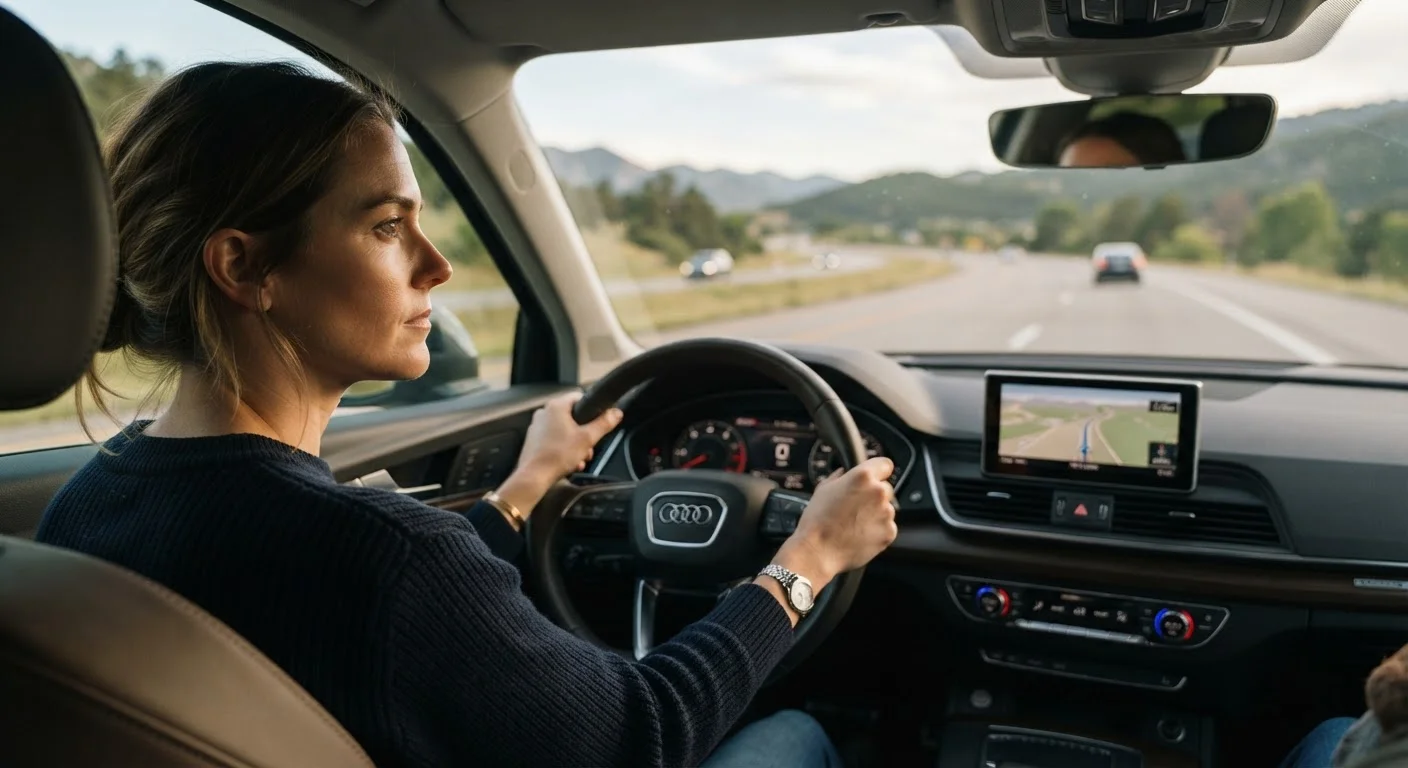
Photo credit: AdvisorHQ.net | Informative Website
In this article
Familiarity breeds complacency. These are the safety practices that tend to erode over time — and why they still matter after years on the road.
Key Takeaways
- Experience can breed overconfidence, causing drivers to abandon habits that actively prevent accidents.
- Following distance, mirror checks, and turn signal use are among the first habits to erode over time.
- Scanning intersections and managing speed in low-visibility conditions remain critical regardless of skill level.
- Complacency is not a character flaw - recognizing it is the first step to correcting it.
Why Experience Doesn't Always Mean Safer Driving
There's a quiet irony in driving experience: the more comfortable you become behind the wheel, the more likely you are to stop doing the things that keep you safe. Cognitive familiarity with a task - any task - leads the brain to automate it, freeing conscious attention for other things. On the road, that other thing is often a phone screen, a mental to-do list, or simple daydreaming.
This isn't a personal failing. It's a predictable pattern in human behavior. Studies on driver attention consistently show that experienced drivers are more prone to certain lapses than newer ones, precisely because they rely more heavily on habit than deliberate attention. The goal isn't to make driving feel stressful again - it's to identify which habits have quietly dropped away and bring them back.
See our guide to defensive versus aggressive driving for a closer look at how attentiveness shapes driving behavior in real-world conditions.
The Habits That Tend to Disappear First
Certain safety practices are almost universally taught to new drivers but quietly abandoned within years - sometimes months. The mistakes below are not about recklessness. Most experienced drivers committing them would describe themselves as careful. That's precisely the problem.
Shrinking the following distance below a safe cushion.
Why it happens: Experienced drivers develop a feel for their car's stopping power that can make a two-second gap seem excessive, especially in light traffic. That confidence often doesn't account for the other driver's behavior.
Using turn signals inconsistently or not at all on familiar roads.
Why it happens: On routes driven hundreds of times, signaling can feel performative. The brain treats the turn as already communicated because the driver's own intention is clear - but other road users don't share that information.
Scanning intersections passively rather than actively checking cross traffic.
Why it happens: After years of uneventful crossings, the motion of looking left and right can become a mechanical gesture rather than an actual visual assessment. Familiarity with a specific intersection often increases this tendency.
Driving distracted in ways that don't involve a phone.
Why it happens: Public awareness around phone use has grown, but experienced drivers often believe their ability to multitask is genuinely superior. Mental distraction - internal monologue, planning, emotional processing - degrades reaction time even when both hands are on the wheel.
Failing to adjust speed for low-visibility or adverse conditions.
Why it happens: Drivers who have navigated bad weather successfully many times may underestimate how much stopping distance increases on wet or icy roads, or how much glare and darkness reduce effective reaction time.
~50%
Of serious crashes involve driver inattention
National Highway Traffic Safety Administration (NHTSA) research consistently identifies inattention or distraction as a contributing factor in roughly half of all serious crash events.
3 sec
Minimum recommended following distance
Traffic safety authorities widely recommend a minimum three-second gap between vehicles under normal conditions, increasing in poor weather or reduced visibility.
Understanding what your mirrors actually miss can sharpen your awareness of the physical limits that no amount of experience can compensate for.
Conditions That Demand Extra Attention
Some driving environments amplify the consequences of a lapsed habit. Wet roads, nighttime conditions, and heavy traffic all reduce the margin for error in ways that catch even experienced drivers off guard.
Speed Limits Assume Ideal Conditions
A posted speed limit is set for dry roads, good visibility, and normal traffic flow. Rain, fog, heavy traffic, and nighttime driving all reduce stopping distances and reaction windows. Driving at the posted limit in poor conditions may still be driving too fast for safety. Adjust your speed based on actual conditions, not just the sign.
Speed management in poor weather is one of the first things experienced drivers misjudge. Posted speed limits represent safe travel under ideal conditions - dry pavement, good visibility, moderate traffic. When conditions change, so should your speed, even if it feels unnecessarily cautious.
Low-light driving deserves particular care. Your eyes process speed and distance less accurately at night than you may expect. Our article on why your vision is less reliable after dark breaks down the science behind that gap. Similarly, hydroplaning can occur at speeds many drivers consider safe - a risk that experience alone does not insulate you against.
Emotional state matters too. Stress, frustration, and fatigue each degrade judgment in ways that feel invisible from the inside. If you notice irritation building behind the wheel, that's worth taking seriously - our coverage of what fuels road rage and how to counter it explores how to recognize and interrupt that cycle before it affects your decisions.
Finally, vehicle condition is part of driving safety. Worn tires, neglected brakes, or a slow oil leak all affect how a car responds - and experienced drivers sometimes become the worst offenders at deferring maintenance. Our guide to routine maintenance explains what's worth staying on top of, and a simple pre-trip check can catch developing issues before they become road hazards.

Author
Cars & Driving Editorial Team
Cars & Driving Editorial Team is the collective byline for our editorial team and contributor network. Articles published under this byline or an editorial pen name are researched, written, and reviewed according to our editorial standards for clarity, consistency, and independence before publication.
View all articles →