
Debt Repayment Strategies: Avalanche, Snowball, and What Research Says
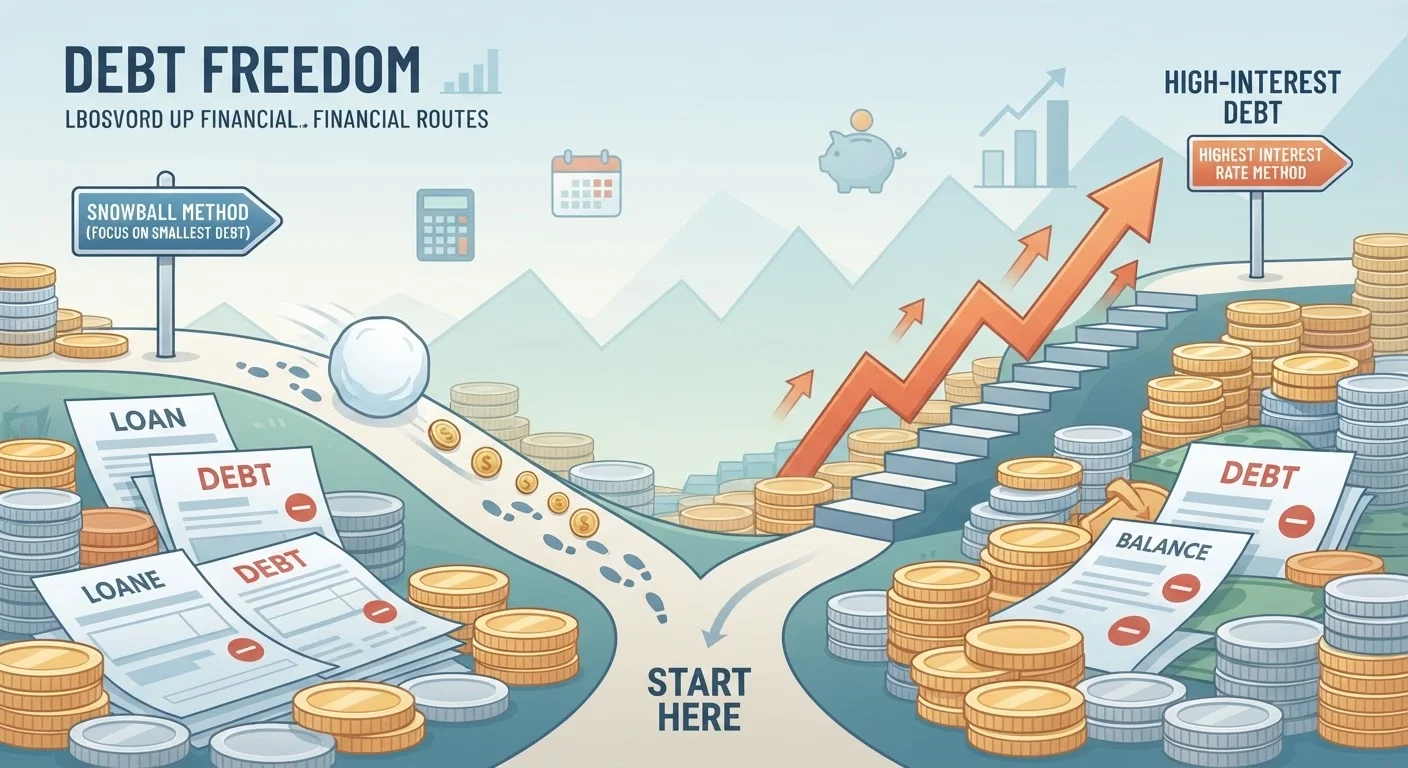
Photo credit: AdvisorHQ.net | Informative Website
In this article
Two popular payoff methods work differently for different people. Understand the math and psychology behind each approach.
Key Takeaways
- The avalanche method targets the highest-interest debt first, minimizing total interest paid over time.
- The snowball method targets the smallest balance first, generating early wins that can sustain motivation.
- Research suggests psychological momentum matters - completion of individual debts influences long-term follow-through.
- Neither method works if minimum payments on other debts are missed; both require consistent discipline.
- Consulting a nonprofit credit counselor can help you choose and stick to a strategy suited to your situation.
Understanding the Two Core Strategies
When you're carrying balances across multiple accounts - credit cards, personal loans, medical bills - deciding which debt to pay down first is not obvious. Two frameworks dominate personal finance guidance: the avalanche method and the snowball method. Before choosing, it helps to understand how the nature of the debt you carry shapes which strategy fits best.
Avalanche method: You direct any extra payment dollars toward the debt with the highest annual percentage rate (APR - the yearly cost of borrowing, including fees), while making minimum payments on all other accounts. Once that balance is eliminated, you roll those freed-up dollars toward the next highest-rate debt, and so on.
Snowball method: You direct extra dollars toward the debt with the smallest balance, regardless of interest rate, while maintaining minimums elsewhere. Once that account is paid off, you redirect its payment toward the next smallest balance.
Both methods share one non-negotiable rule: minimum payments on every other account must be made on time, every month. Missing them triggers fees and credit score damage that undermine either strategy. For a deeper look at how interest and fee structures can quietly work against you, see why borrowers end up deeper in debt despite making payments.
| Avalanche Method | Snowball Method | |
|---|---|---|
| Payoff order | Highest APR first | Smallest balance first |
| Total interest paid | Lower (mathematically optimal) | Potentially higher |
| Time to first payoff | Longer if high-rate debt is large | Faster - smallest balance first |
| Psychological reward | Delayed; driven by long-term savings | Early wins boost motivation |
| Best suited for | Disciplined, numbers-focused borrowers | Those who need visible progress |
| Research support | Mathematically validated | Behavioral evidence supports completion rates |
What the Math Says - and Where It Falls Short
On pure arithmetic, the avalanche method wins. By neutralizing your highest-cost debt first, you reduce the compounding interest that accumulates across your remaining balances. Depending on the size and rates of the debts involved, this can translate to a meaningful difference in total dollars paid and time to full payoff.
However, math alone doesn't account for human behavior. A high-rate balance may also be your largest balance - meaning it could take months or years of effort before you see a single account disappear. For some people, that extended wait is demotivating enough to cause them to abandon the plan entirely.
Track Progress Visually to Stay Motivated
Regardless of which method you choose, keeping a simple visual record - a spreadsheet, a debt payoff chart, or even a handwritten list - helps make progress feel real. Seeing a balance drop or an account close can reinforce the habit of directing extra dollars toward debt. Motivation tends to compound just like interest does.
Research published in financial and behavioral economics journals - including studies examining how borrowers allocate extra debt payments - has found that people are more likely to stay engaged when they experience concrete progress, such as fully eliminating an account. This behavioral pattern, sometimes called the "snowball effect" in consumer finance literature, helps explain why the snowball method outperforms predictions based on interest costs alone for certain borrowers.
The takeaway: the mathematically optimal plan only delivers its benefits if you follow it consistently. A plan with slightly higher total interest but a higher probability of completion may produce better real-world outcomes for many people.
Choosing the Approach That Works for You
There is no universally correct answer. Honest self-assessment matters more than following a rule. Consider a few questions:
- How large is the gap between your highest-rate and smallest-balance debts? If they overlap significantly - or your highest-rate debt is also a small balance - the avalanche and snowball methods may point to the same debt anyway.
- What is your track record with financial goals? If you've started debt repayment plans before and abandoned them, the early wins of the snowball method may provide needed momentum.
- How much does total interest cost concern you? If you're highly motivated by numbers and long-term efficiency, the avalanche method's logic may sustain your focus over time.
Some borrowers use a hybrid: they start with the snowball to eliminate one or two small balances quickly, then switch to the avalanche to address high-rate accounts. This isn't a formally defined strategy, but it acknowledges that motivation and math both matter.
If your debt situation feels overwhelming or complex, debt consolidation is another avenue worth understanding - though it comes with its own trade-offs. Nonprofit credit counseling agencies can also help you map out a repayment plan without selling you a product.
Whatever approach you choose, pairing it with the habits that keep debt manageable over time is what transforms a one-time decision into lasting financial progress. And if you're rethinking your broader money system, exploring paying yourself first vs. budgeting what's left can help frame where debt repayment fits within your overall financial priorities.
This article is for general informational and educational purposes only and does not constitute personalized financial, tax, or legal advice. Please consult a qualified financial professional for guidance suited to your individual circumstances.

Author
Finance Editorial Team
Finance Editorial Team is the collective byline for our editorial team and contributor network. Articles published under this byline or an editorial pen name are researched, written, and reviewed according to our editorial standards for clarity, consistency, and independence before publication.
View all articles →