
Decluttering Methods Compared: KonMari, Swedish Death Cleaning, and the Four-Box Approach
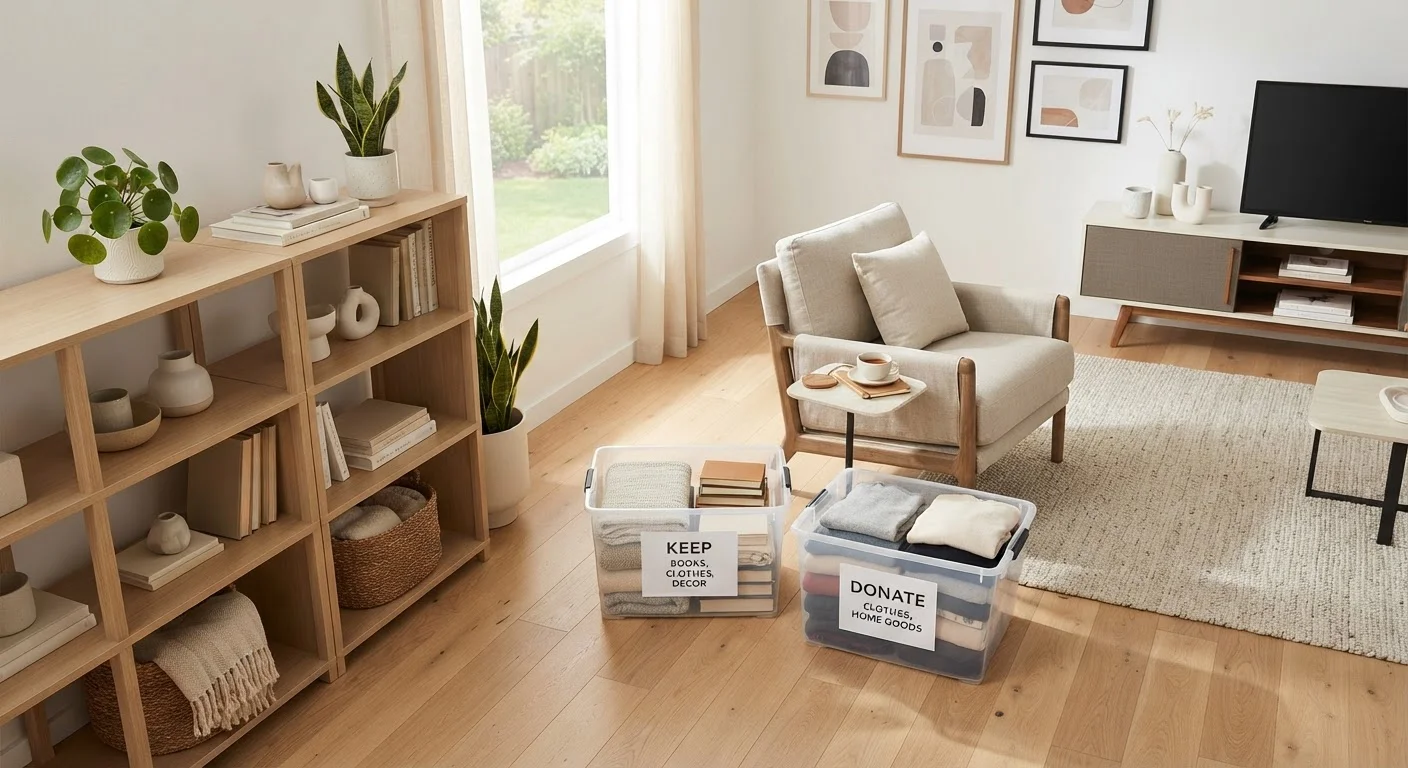
Photo credit: AdvisorHQ.net | Informative Website
In this article
KonMari, Swedish Death Cleaning, and the Four-Box method each take a different angle on letting go of stuff. See how they differ and which suits your style.
Key Takeaways
- KonMari works category by category and asks whether each item sparks joy before keeping it.
- Swedish Death Cleaning is motivated by legacy - reducing the burden left behind for loved ones.
- The Four-Box method is the most flexible and accessible approach, requiring no philosophical shift.
- Each method suits a different personality, life stage, and urgency level.
- Any method works best when paired with a long-term maintenance habit after the initial sort.
What Sets These Three Methods Apart
Decluttering advice is everywhere, but three frameworks have proven durable enough to earn real followings: the KonMari Method, Swedish Death Cleaning (Döstädning), and the Four-Box Method. On the surface, all three are about getting rid of stuff you no longer need. In practice, they differ significantly in philosophy, pace, and the kind of person each one tends to suit.
Understanding those differences before you start can save you from abandoning a process halfway through - which often leaves a home more chaotic than when you began. Think of choosing a decluttering method the way you might choose a productivity system: the best one is the one that fits how you actually think. (For a parallel look at that kind of decision, see our piece on choosing a productivity approach that fits your work style.)
KonMari: Tidying by Category, Guided by Joy
Developed by organizing consultant Marie Kondo, the KonMari Method asks a deceptively simple question of every item you own: Does this spark joy? If it does, you keep it. If it doesn't, you thank it and let it go. The method works through five fixed categories in order - clothing, books, papers, miscellaneous items (komono), and sentimental items - rather than room by room.
This category-first approach is deliberate. Gathering every item in one category from across the entire house before evaluating it forces you to see the full volume of what you own, which tends to make decisions easier. The process is typically done in one concentrated effort rather than spread across weeks.
Best suited for: People motivated by emotional connection to their belongings, those ready to commit to a full-home overhaul, and households where one person makes most decisions. It can be challenging in shared homes - a topic explored in depth in our guide on organizing shared living spaces with different standards.
Start With Clothing, Not Sentimental Items
If you're trying KonMari for the first time, resist the urge to start with photographs or keepsakes. Kondo's prescribed order - clothing first, sentimental items last - is intentional. Earlier categories help you develop your sense of what 'sparks joy' before you reach the items that carry the most emotional weight. Starting with sentimental items is one of the most common reasons people stall out.
Swedish Death Cleaning: Decluttering With the Long View
Döstädning - loosely translated as "death cleaning" - is a Scandinavian tradition of gradually and intentionally reducing your possessions so that loved ones won't be burdened with sorting through them after you're gone. Author Margareta Magnusson brought the concept to a wider English-speaking audience, framing it not as morbid but as an act of consideration and self-reflection.
Unlike KonMari, Swedish Death Cleaning has no fixed sequence. You work at your own pace, guided by the question: Will anyone I love be happy they have this after I'm gone? Items that don't clear that bar are passed on, donated, or discarded - ideally with intention rather than haste.
Best suited for: Adults in their 50s and beyond, anyone facing a major life transition (downsizing, moving, a health change), or those who want to combine decluttering with estate planning. The process naturally invites conversations about what to pass on to family members and how.
| KonMari | Swedish Death Cleaning | Four-Box Method | |
|---|---|---|---|
| Core question | Does this spark joy? | Will anyone want this after I'm gone? | Keep, donate, trash, or relocate? |
| Organizing sequence | Fixed categories across whole home | No fixed sequence, self-paced | Room by room or space by space |
| Time commitment | Intensive, multi-day effort | Gradual, months to years | Flexible, short sessions possible |
| Philosophical framework | High - joy and intentionality | High - legacy and consideration | Low - purely practical |
| Ease for beginners | Moderate | Moderate | High |
| Works well in shared homes | Challenging | Moderate | Best suited |
| Risk of clutter returning | Lower if fully completed | Lower - ongoing practice | Higher without maintenance rules |
The Four-Box Method: Simple, Flexible, and Immediate
The Four-Box Method skips the philosophy entirely. You move through your home space by space, and for every item you pick up, you decide: Keep, Donate/Sell, Trash, or Relocate (meaning it belongs in a different room). Four labeled boxes or bags serve as the sorting mechanism.
Its strength is accessibility. There's no required sequence, no emotional framework, and no prerequisite mindset shift. You can tackle a single closet in an afternoon and feel immediate progress. The method also scales well - from a junk drawer to an entire garage.
The downside is that without a guiding principle, it's easier to default to keeping things out of habit rather than intention. It's also the method most likely to produce a tidy-looking space that still contains a lot of unnecessary items. Pairing it with a maintenance rule afterward - like the one-in, one-out principle - helps prevent clutter from returning. Our guide on maintenance rules that keep homes tidy covers practical options for that next step.
For paper and documents specifically, the Four-Box approach pairs particularly well with a sorting system. See our complete guide to managing paper clutter at home for a room-by-room approach to one of the most stubborn clutter categories.
Choosing the Right Method for Your Situation
The honest answer is that any of these methods can work - the variable is follow-through. A few questions can point you in the right direction:
- How much time can you dedicate at once? KonMari often requires several focused days. The Four-Box method works in short bursts. Swedish Death Cleaning unfolds over months or years.
- What's your primary motivation? Emotional resonance points toward KonMari. Legacy and simplification point toward Swedish Death Cleaning. Immediate, practical results point toward the Four-Box method.
- Are others in your household involved? The Four-Box method is the easiest to adapt for group participation. KonMari, by design, works best when the person doing the sorting makes their own decisions.
- How attached are you to your belongings? If decision fatigue or sentimentality is a challenge, a structured emotional framework like KonMari may actually make decisions easier, not harder.
If you're drawn to a more radical simplification - or want to understand what you might be trading away - our article on the pros and cons of going fully minimalist at home offers a balanced look at that path.

Author
Home & Garden Editorial Team
Home & Garden Editorial Team is the collective byline for our editorial team and contributor network. Articles published under this byline or an editorial pen name are researched, written, and reviewed according to our editorial standards for clarity, consistency, and independence before publication.
View all articles →