
Zone-Based Organization: How to Structure Any Room Around How You Actually Use It
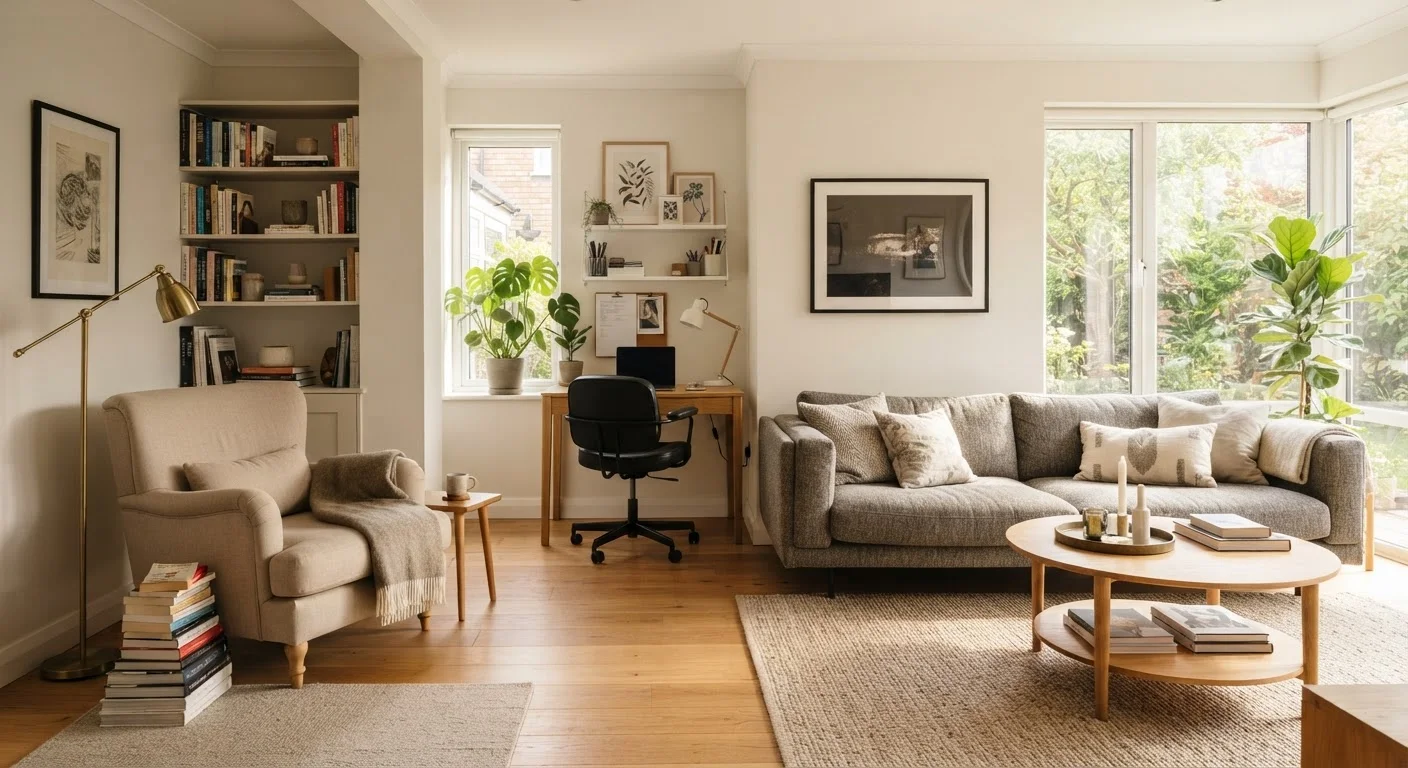
Photo credit: AdvisorHQ.net | Informative Website
In this article
Learn how dividing a room into activity zones — rather than organizing by object type — creates lasting order that fits your daily routines.
Key Takeaways
- Organizing by activity rather than object type creates systems that stay functional over time.
- Most rooms naturally support two to four distinct activity zones based on real daily habits.
- Zone boundaries don't require walls - furniture placement, rugs, and lighting can define them.
- Items should live in the zone where they're used, not where they seem like they belong.
- Zones should be reassessed whenever your routines or household members change.
Why Object-Based Organization Tends to Break Down
Most people organize by category - all the books together, all the chargers in one drawer, all the craft supplies in one bin. It feels logical at first. But this approach ignores a fundamental reality: people don't move through a room by category. They move through it by task.
When you sit down to pay bills, you need the laptop, a pen, the checkbook, and maybe a snack. Those items live in four different "category" homes across the room. You pull them all out, use them together, and then face the friction of returning each one to its separate place. That friction is why clutter builds back up so quickly after a clean-out.
Zone-based organization flips the logic. Instead of asking what type of thing is this?, you ask what do I do here, and what do I need to do it? This approach is part of a broader philosophy covered in our beginner's guide to home organization, and it tends to produce systems that people actually maintain.
What You'll Need Before You Start
Zone mapping requires observation more than supplies. Before moving anything, spend a day or two noticing how you actually use the room - not how you think you use it.
What you will need
Notebook or notes app
Record which activities happen in which areas of the room during your observation period.
Measuring tape
Measure furniture dimensions and floor space before committing to a new layout.
Painter's tape
Temporarily mark proposed zone boundaries on the floor to visualize the layout before moving anything.
Bins or baskets
Contain zone-specific items within their designated area, especially for zones that need flexible storage.
How to Map and Build Your Zones
Follow these steps in order. Resist the urge to skip ahead to rearranging furniture before you've completed the mapping phase - the physical layout should follow the behavioral map, not the other way around.
List every activity that happens in the room
Write down every distinct activity that takes place in the room - not what you think should happen there, but what actually does. In a living room, this might include watching TV, helping kids with homework, video calls, reading, folding laundry, and casual conversations. In a bedroom, it might include sleeping, getting dressed, working from bed, and skincare routines.
Aim for specificity. "Relaxing" is too broad; "reading before bed" and "scrolling on the phone" are two different activities that may need different setups.
Group activities into two to four zones
Cluster related activities together into logical zones. Most rooms support between two and four zones comfortably - more than that and the boundaries become hard to maintain. A living room might have a screen zone, a conversation zone, and a quiet work zone. A home office might have a primary work zone and a reference/storage zone.
Look for activities that use the same items or the same body position - they likely belong in the same zone.
Identify what each zone needs to function
For each zone, list every item required to perform the activities within it. Don't think about where those items currently live - just identify what needs to be present. A homework zone might need: pencils, scissors, paper, a charging cable, and a lamp. A reading zone might need: books currently in rotation, reading glasses, a blanket, and a charger.
Assign physical locations in the room to each zone
Now map the zones onto the actual room. Consider natural light sources, outlets, traffic paths through the space, and proximity to adjacent rooms. A work zone benefits from an outlet and good lighting; a relaxation zone may work better away from foot traffic. Sketch the layout roughly before moving furniture.
Relocate items so they live in their zone
Move items from wherever they currently are stored to the zone where they're actually used. This is often the most counterintuitive step - a TV remote might logically "belong" with electronics, but it functionally belongs in the screen zone. Scissors used only at the craft table belong in the craft zone, not in the kitchen junk drawer.
Anything that doesn't belong to any zone in this room should be relocated to another room or removed from the home entirely.
Defining Zone Boundaries Without Renovation
A zone doesn't need a wall. Some of the most effective zone boundaries are created entirely through furniture orientation, area rugs, and lighting. A reading chair angled away from the TV signals a distinct purpose even in an open-plan room. A small rug under a desk anchors a work zone visually and physically.
In smaller spaces, vertical organization can help reinforce zone distinctions without consuming floor area. Our article on vertical vs. horizontal storage explores how directionality affects your available options depending on room size and layout.
Use Lighting to Reinforce Zone Identity
Lighting is one of the most underused zone-definition tools. A dedicated lamp in a reading nook or a desk lamp in a work corner signals a distinct purpose even in an open room. Consider using warm, lower-intensity lighting in relaxation zones and brighter, cooler light in task zones to physically reinforce the difference.
Keep in mind that zones in shared homes may need negotiation. A workspace zone that works perfectly for one person may conflict with another resident's relaxation area. Our guide on organizing shared living spaces addresses how to build systems that accommodate more than one set of habits.
Keeping Zones Functional Over Time
Zones drift. As seasons change, as family members' routines evolve, or as new items enter the home, the original zone map may no longer match how the room is actually being used. Schedule a brief zone audit every few months - not a full reorganization, just a check to see whether items are still living in the zone where they're being used.
Items that consistently migrate out of their assigned zone are telling you something. Either the zone boundaries need to shift, or the item belongs somewhere else entirely. Items that are seasonal - holiday decorations, sports gear, extra bedding - generally shouldn't occupy prime zone real estate year-round. Our piece on seasonal rotation systems covers how to build a practical off-season storage rotation.
Once your zones are working, the next challenge is preventing clutter from gradually reclaiming them. Simple maintenance rules - like the one-in, one-out principle - make a meaningful difference over the long term. You can explore those in detail in our guide to maintenance rules that keep homes tidy.

Author
Home & Garden Editorial Team
Home & Garden Editorial Team is the collective byline for our editorial team and contributor network. Articles published under this byline or an editorial pen name are researched, written, and reviewed according to our editorial standards for clarity, consistency, and independence before publication.
View all articles →