
Timing Belt vs. Timing Chain: One You Replace, One You Monitor
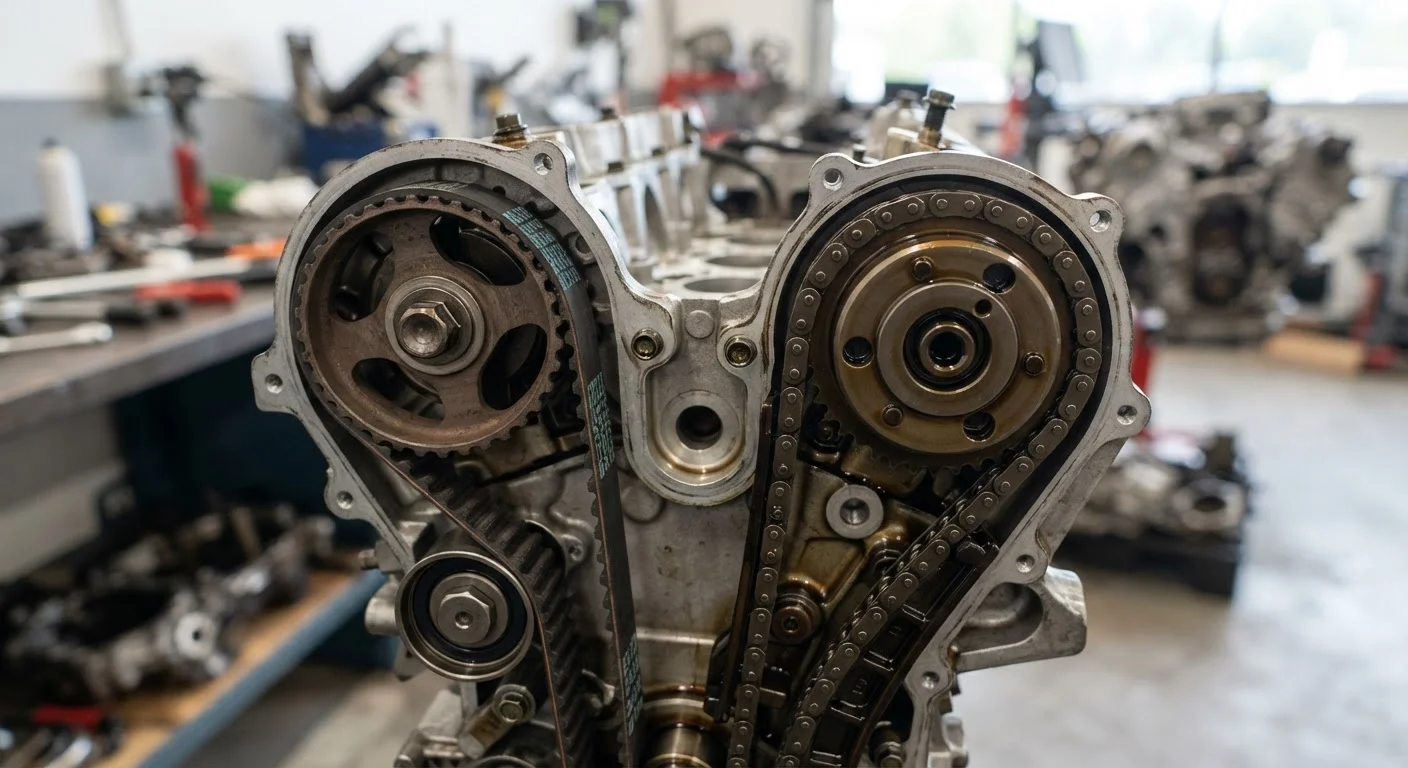
Photo credit: AdvisorHQ.net | Informative Website
In this article
Timing belts and chains do the same job but have very different maintenance needs. Learn what your vehicle uses and why it matters.
Key Takeaways
- Timing belts require proactive replacement - typically every 60,000-100,000 miles - regardless of visible condition.
- Timing chains are metal and generally expected to last the life of the engine with proper oil maintenance.
- A failed timing belt can cause catastrophic engine damage in interference engines, making adherence to service intervals critical.
- Your owner's manual is the authoritative source for determining which system your vehicle uses and its service interval.
- Neither component should be ignored - chains can stretch or wear if oil changes are neglected.
What Both Components Actually Do
Your engine's pistons and valves must move in precise coordination - fractions of a second apart - or the engine will not run efficiently and may sustain serious damage. The timing belt or timing chain is what enforces that coordination. It links the crankshaft (which drives the pistons) to the camshaft (which opens and closes the valves), keeping every moving part synchronized.
Both components do the same mechanical job. The difference lies in what they are made of, how long they last, and what happens when they are neglected. Understanding which one your vehicle uses - and what that means for your maintenance schedule - is one of the most important things an everyday driver can know about their engine.
| Criterion | Timing Belt | Timing Chain |
|---|---|---|
| Material | Reinforced rubber | Metal roller chain |
| Typical lifespan | 60,000-100,000 miles or 7-10 years | Designed to last engine's lifetime |
| Scheduled replacement | Yes - mandatory interval | Generally none |
| Failure risk if neglected | High - sudden snap possible | Moderate - stretch, rattle, wear |
| Engine damage on failure | Severe in interference engines | Significant if chain skips or breaks |
| Primary maintenance dependency | Mileage/age interval | Consistent, clean engine oil |
| Location in engine | Outside engine block (covered) | Inside engine, oil-lubricated |
| Noise level | Quieter operation | Slight mechanical noise normal |
Timing Belts: Why the Replacement Interval Is Non-Negotiable
A timing belt is made of reinforced rubber with teeth molded into its inner surface. Rubber ages from heat, oil exposure, and mechanical stress - even when a belt looks intact on the outside, its internal fibers can be degrading. This is why manufacturers set mileage- and age-based replacement intervals (commonly 60,000 to 100,000 miles, or every 7-10 years, whichever comes first) rather than waiting for visible signs of wear.
The stakes are highest in interference engines, where the pistons and valves occupy overlapping space in the cylinder. If the timing belt snaps in an interference engine, pistons and valves collide - often bending valves, damaging pistons, or destroying the entire engine. Non-interference engines are more forgiving: the engine stalls, but internal collision damage is less likely. Check your owner's manual or ask a qualified mechanic to confirm which type you have.
Interference vs. Non-Interference Engines
In an interference engine, the pistons travel high enough in the cylinder to occupy the same space the valves use when open. If timing is lost - due to a broken belt or jumped chain - the two collide. Non-interference engines have enough clearance that a timing failure causes a stall rather than internal collision. The distinction significantly affects the consequences of a timing belt failure, making it important to know which type your engine is.
Because a timing belt replacement also grants access to adjacent components, many mechanics recommend replacing the water pump, tensioner, and idler pulleys at the same time. Bundling these services saves labor costs and reduces the risk of a related failure that would otherwise require disassembling the same parts again. This is part of the broader strategy covered in routine maintenance that keeps repair bills manageable.
Timing Chains: Durable but Not Invincible
A timing chain is a metal roller chain - similar in concept to a bicycle chain - running inside the engine and lubricated by engine oil. Because it is metal, it does not have the same heat- and age-related degradation that affects rubber belts. Most timing chains are engineered to last the lifetime of the engine, and many manufacturers list no scheduled replacement interval for them.
However, "no scheduled replacement" does not mean "no maintenance required." Timing chains depend on clean, properly pressurized engine oil for lubrication and tension control. Worn or dirty oil causes chain stretch and accelerates wear on the tensioners and guides that keep the chain taut. A stretched chain can cause rattling noises on startup, misfires, or - if ignored long enough - chain skip or failure.
This is why your oil change interval matters just as much for timing chain engines as any other. Skipping oil changes is the most common reason a "lifetime" timing chain needs early replacement. See also our guide on synthetic vs. conventional motor oil for guidance on choosing the right oil for your engine type.
How to Find Out What Your Vehicle Has
The fastest way to confirm whether your vehicle has a timing belt or chain is to check the owner's manual - look in the maintenance schedule section for any mention of timing belt replacement. If no such interval appears, your engine likely uses a chain, though confirming with a qualified mechanic is always a sound approach.
You can also search your vehicle's year, make, model, and engine size using reputable automotive databases, or simply ask during your next service visit. Keeping a record of which system your vehicle uses - and any service performed - is a straightforward habit that pays dividends over time. Our guide on keeping good maintenance records walks through what to track and why it matters.
Timing belt replacement is not a typical DIY task for most drivers - it requires precise installation and specialized tools. For context on where to draw the line between home maintenance and professional service, see DIY car maintenance: where it makes sense and where to stop.
60K-100K
Miles: typical timing belt replacement interval
Most manufacturers specify replacement between 60,000 and 100,000 miles, but always defer to your vehicle's owner's manual for the exact figure.
~$500-$1,000+
Estimated timing belt replacement cost (parts + labor)
Costs vary widely by vehicle make, model, and region; replacing the water pump and tensioner at the same time typically adds modest cost but avoids a second labor charge.
1 in 3
Rough share of newer vehicles using timing belts
Industry trends have shifted toward timing chains in many modern engine designs, though a significant share of vehicles on the road still use belts.

Author
Cars & Driving Editorial Team
Cars & Driving Editorial Team is the collective byline for our editorial team and contributor network. Articles published under this byline or an editorial pen name are researched, written, and reviewed according to our editorial standards for clarity, consistency, and independence before publication.
View all articles →